Wildflower of the valley
Indian Aconite
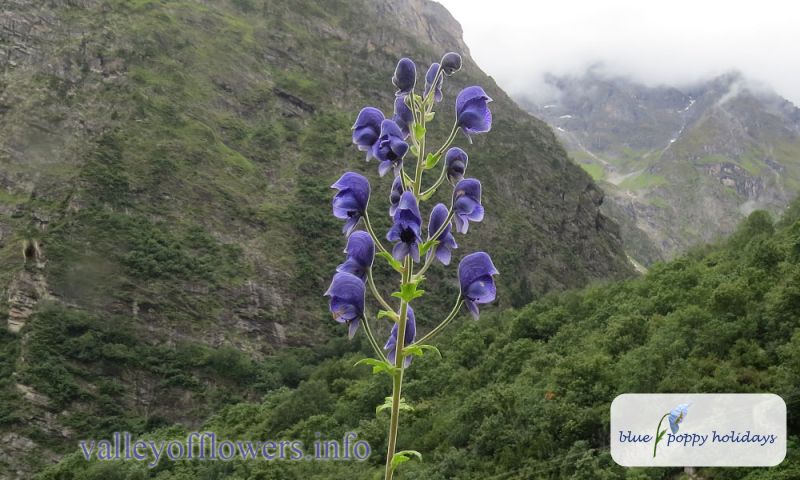
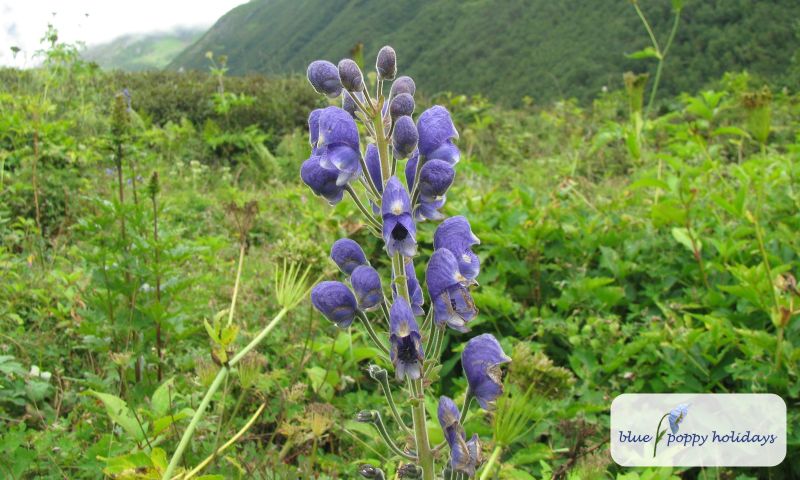
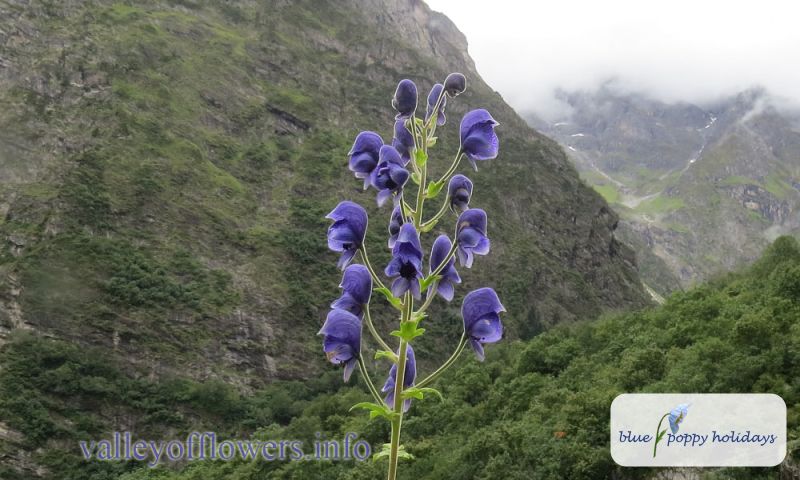
Aconitum balfourii
- How easy to find
- Rare — you will see it only in some places
- Flower size
- Large
- Family
- Ranunculaceae (Buttercup family)
- Local name
- Meeta Vish, Mintha
- Type
- Herb
- Height
- 1 m
- Altitude
- 3000–4200 m
- Flower colour
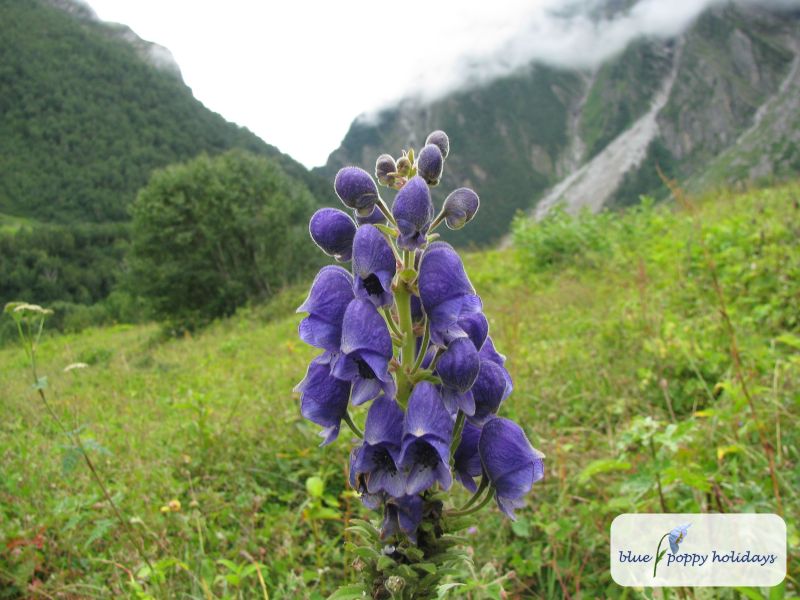
- Blue
- Flowering
- July to September
About Indian Aconite
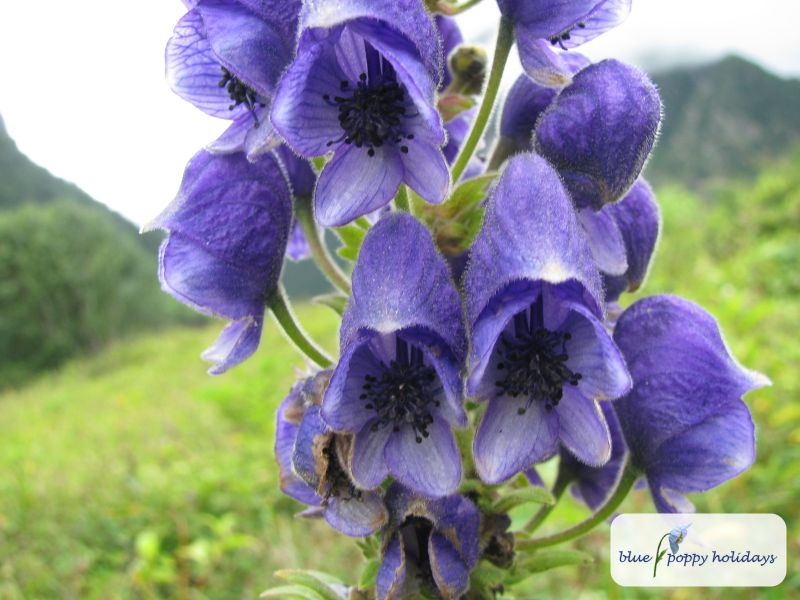
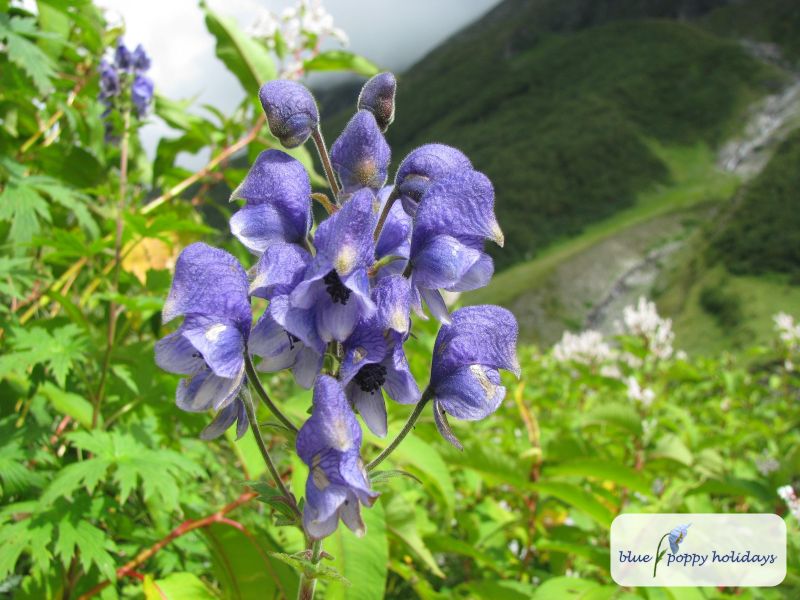
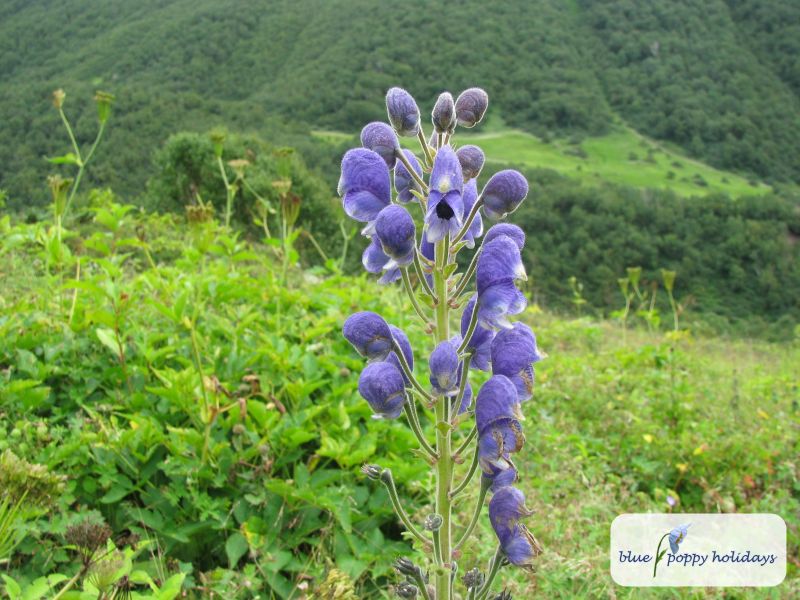
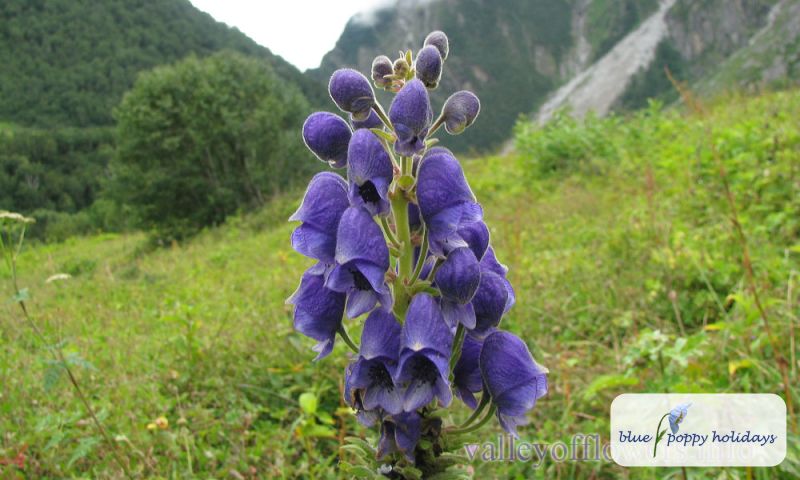
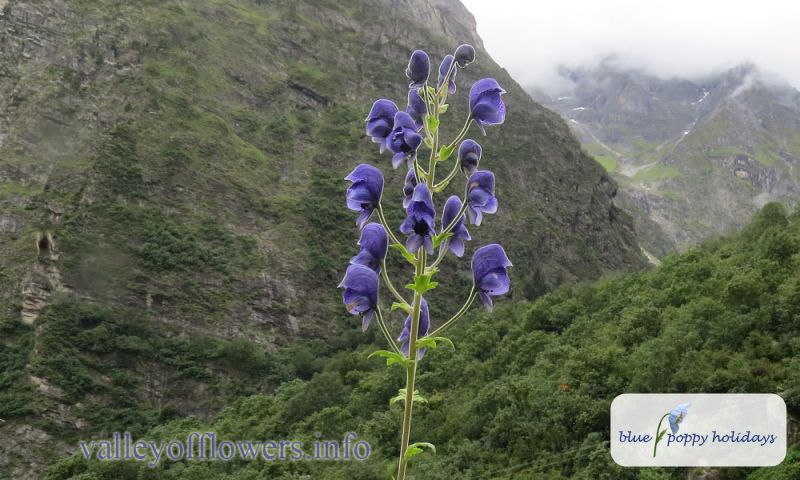
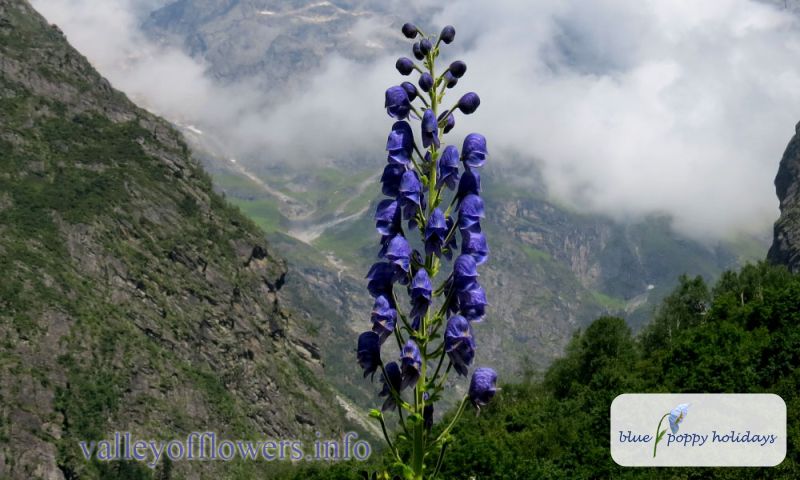
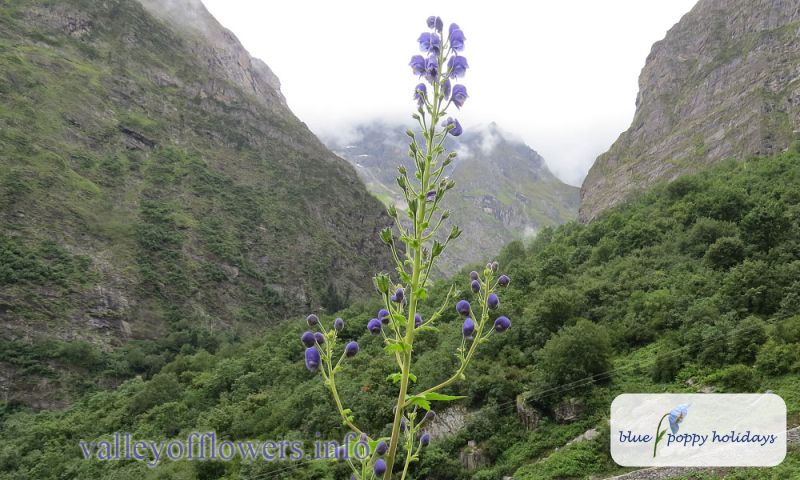
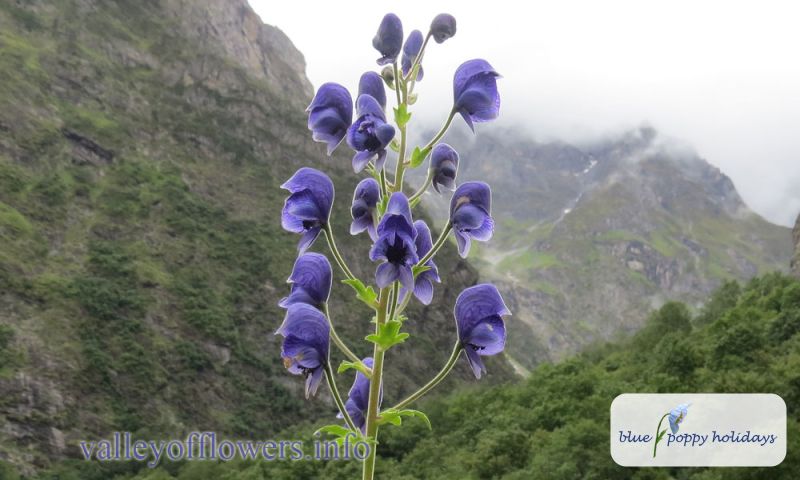
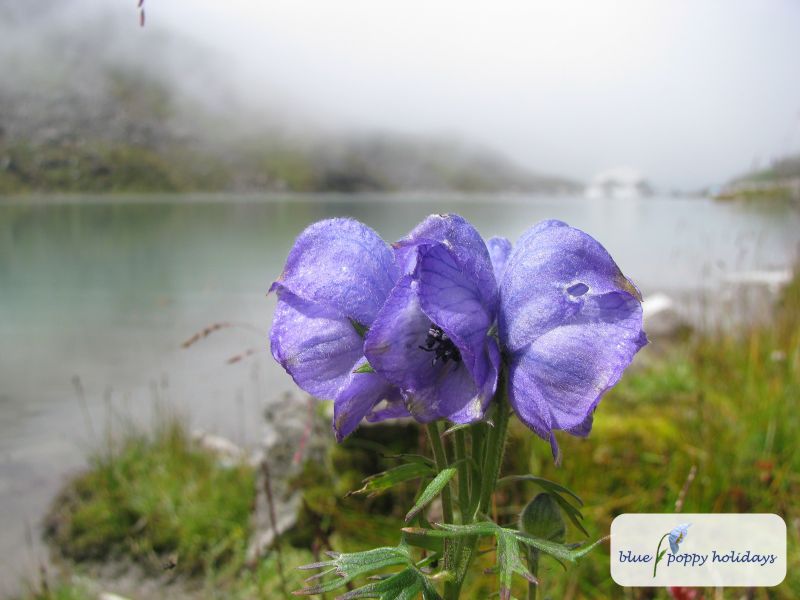
The generic name Aconitum means arrow. Ancient Greek hunters used to smear the juice of roots on arrows for hunting practices. The species name is named after John Hutton Balfour who served as a Professor of Botany at Edinburgh and Glassgow University. Aconitum balfourii is a erect herb of height 1 m. Roots are tuberous. Flowers are blue in color. Upper most sepal is of helmet shape. Sepals and Petals both are 5 in number. There are many stamens with hairy filaments.
Where to find it
- In the middle of the valley
Habitat
Mountains slopes and Meadows
Uses & folklore
Tubers are used for Fever, sciatica and bowel complaints. in Tibet it is used as an analgesic. Also used as an Antiinflammatory, Antirheumatic and Vermifuge
What the name means
Aconitum comes from the Greek akoniton, an ancient name for poisonous plants; balfourii honours John Hutton Balfour, a 19th-century Scottish botanist.
Don't confuse it with
In the valley you may also encounter Aconitum violaceum (sno 5), which has violet flowers rather than indigo-blue and a shorter stature.