Wildflower of the valley
Creeping Aster
Aster diplostephioides
- How easy to find
- Rare — you will see it only in some places
- Flower size
- Medium
- Family
- Asteraceae (Sunflower family)
- Type
- Herb
- Height
- medium
- Flower colour
- yellow
- Flowering
- June to September
About Creeping Aster
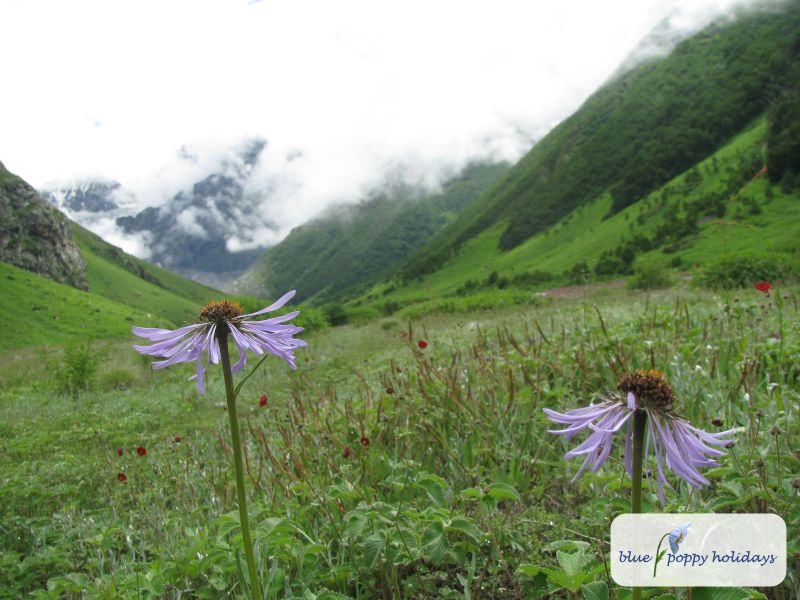
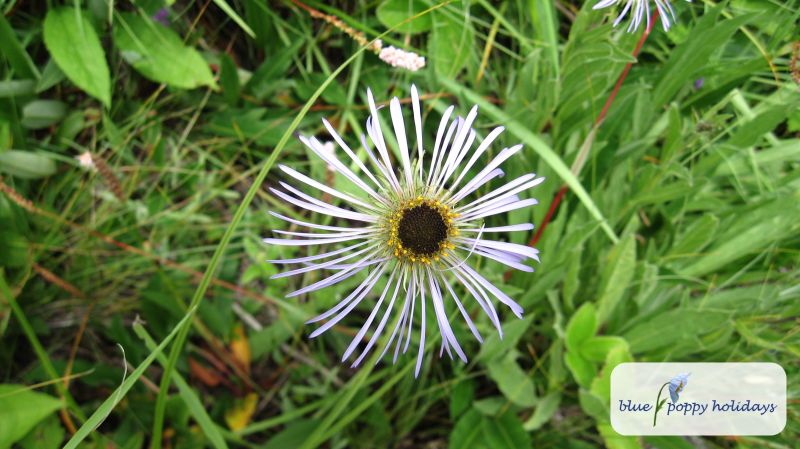
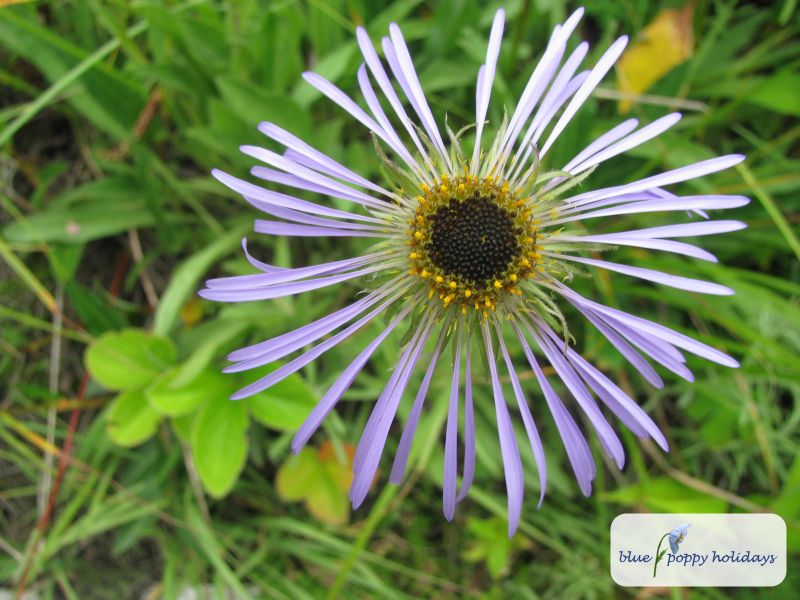
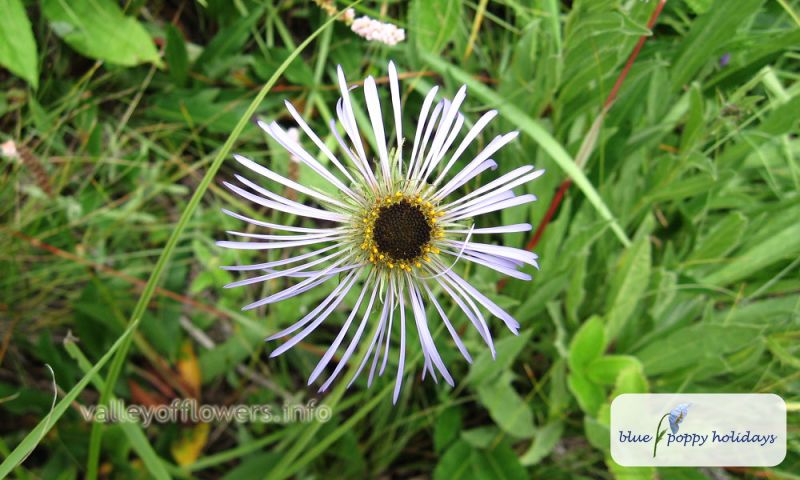
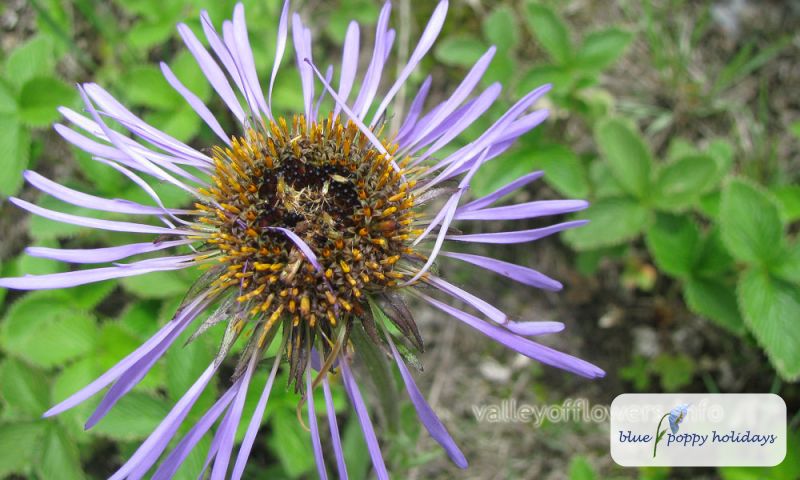
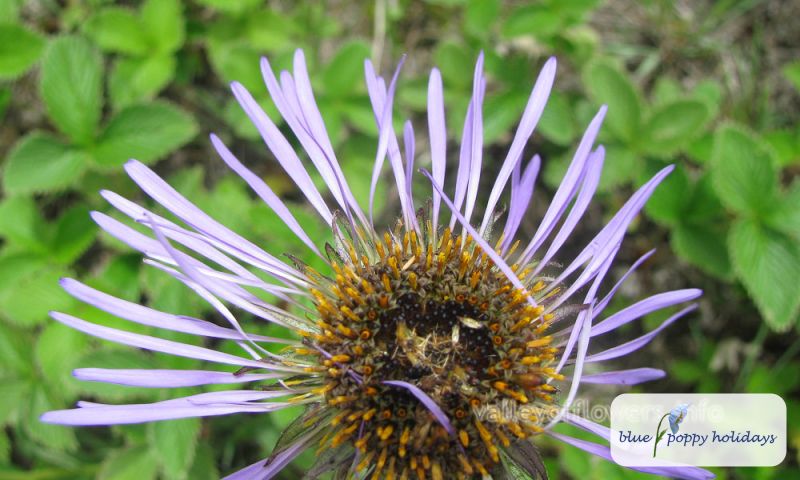
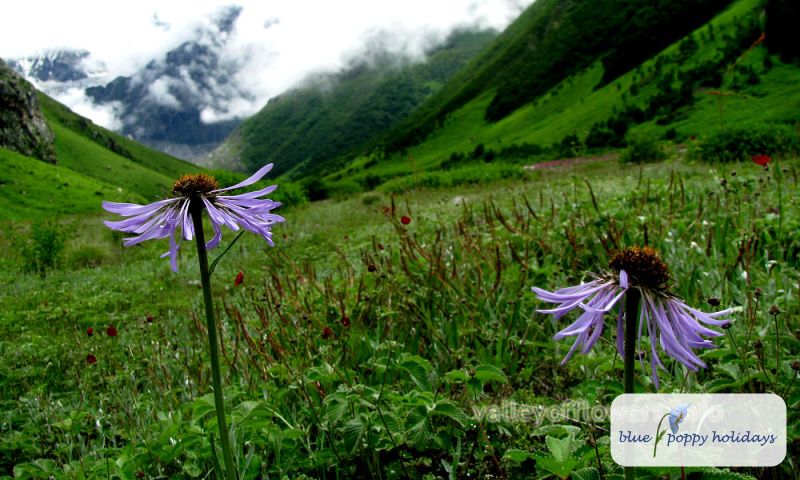
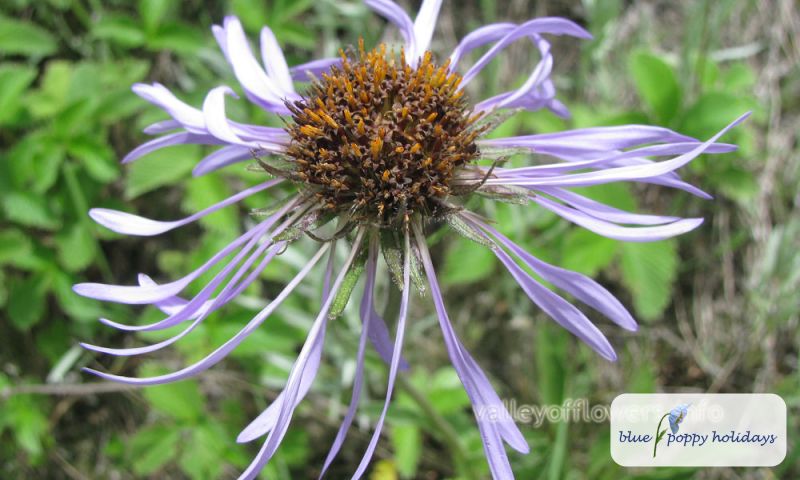
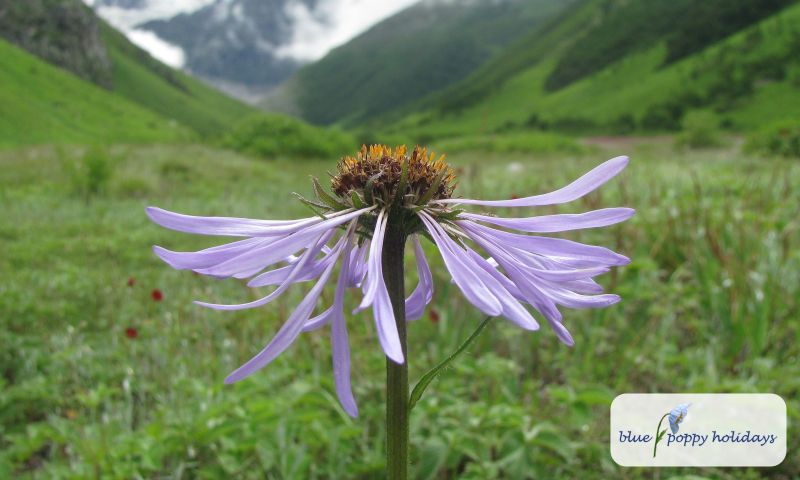
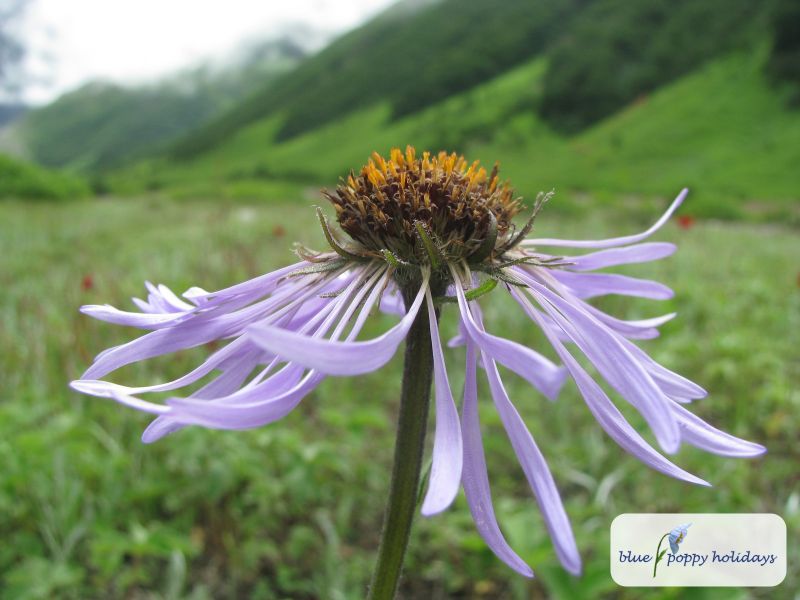
Aster diplostephioides is an erect herb of 10 to 40 cm. It is also called a creeping aster as it is a low growing aster and almost creeps. It has lance leaves which are lost in grassy growth of the surrounding. Ray florets are lilac and disc florets are first blackish and then orange in color. Ray florets are long and narrow and they bend backwards.
Where to find it
- In the middle of the valley
- In the deeper parts of the valley
Habitat
Commonly in grasslands, alpine meadows or slopes.
Uses & folklore
In Tibet flowers are used to treat fever, influenza, arrest bleeding and poisoning.
What the name means
Aster is Greek for "star", after the star-shaped ray florets; diplostephioides means "resembling Diplostephium" (a related genus).
Don't confuse it with
Aster albescens (sno 88) has whitish flowers; Erigeron multiradiatus (sno 25) has many narrower ray florets.