Wildflower of the valley
Small-leaved Trailing Bellflower
Cyananthus microphyllus
- How easy to find
- Rare — you will see it only in some places
- Flower size
- Medium
- Family
- Campanulaceae (Bellflower family)
- Type
- Perennial
- Height
- 5–10 cm
- Flower colour
- Blue
- Flowering
- August to September
About Small-leaved Trailing Bellflower
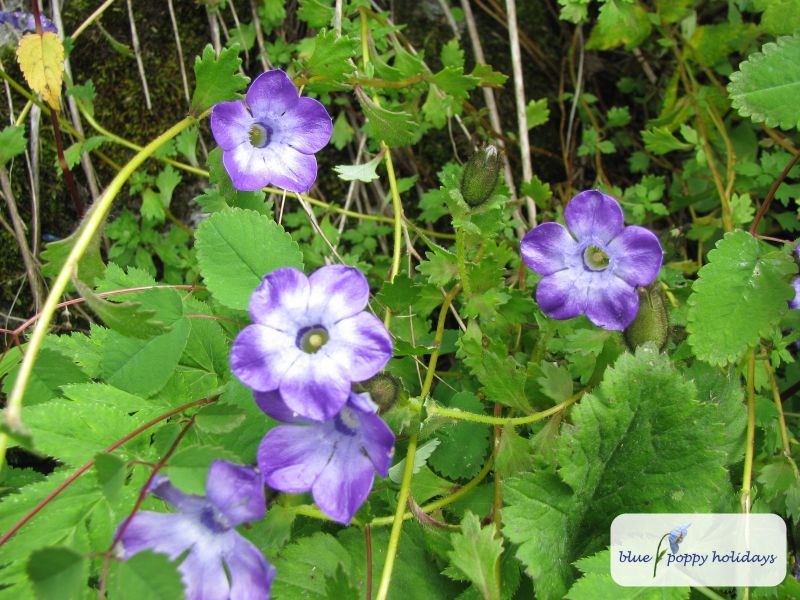
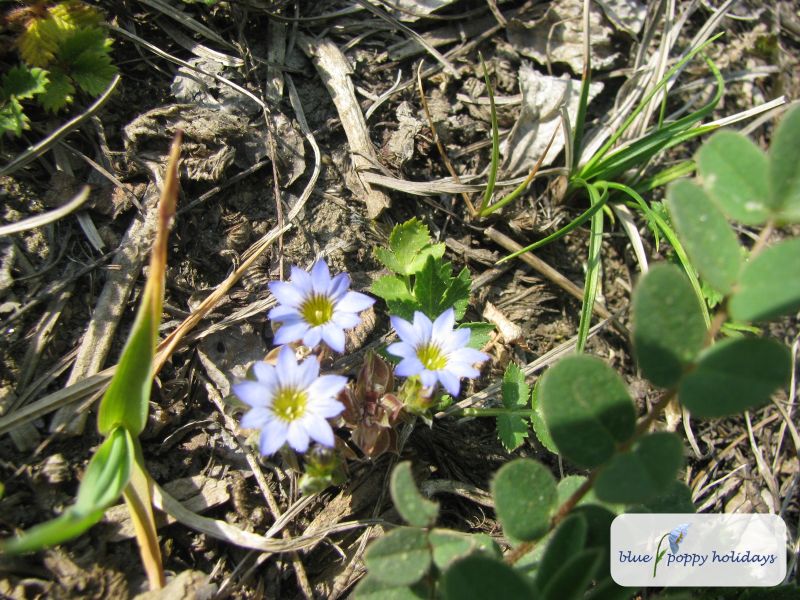
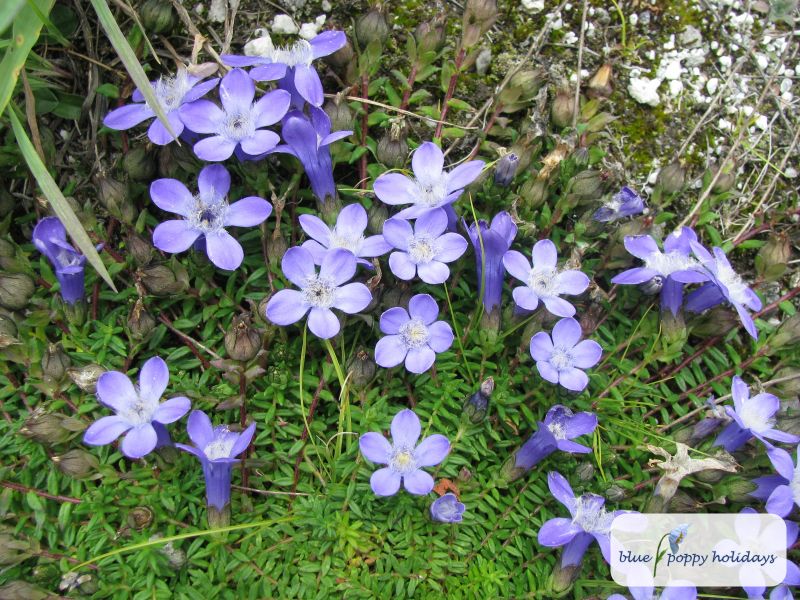
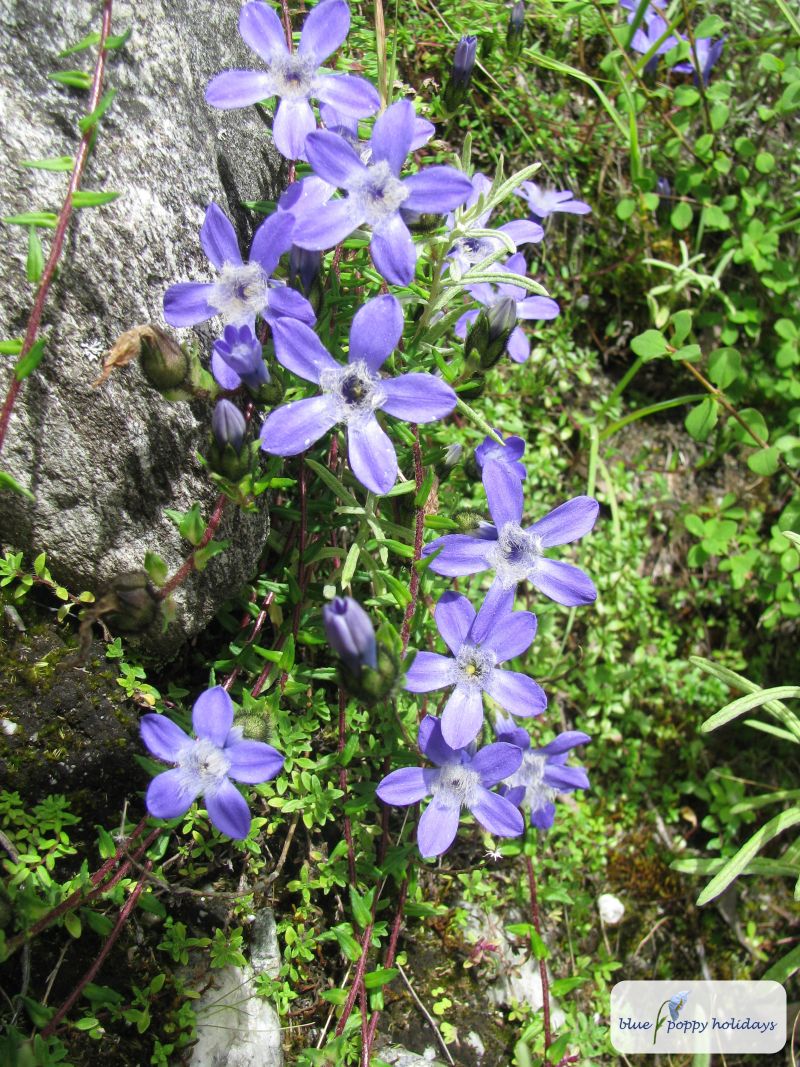
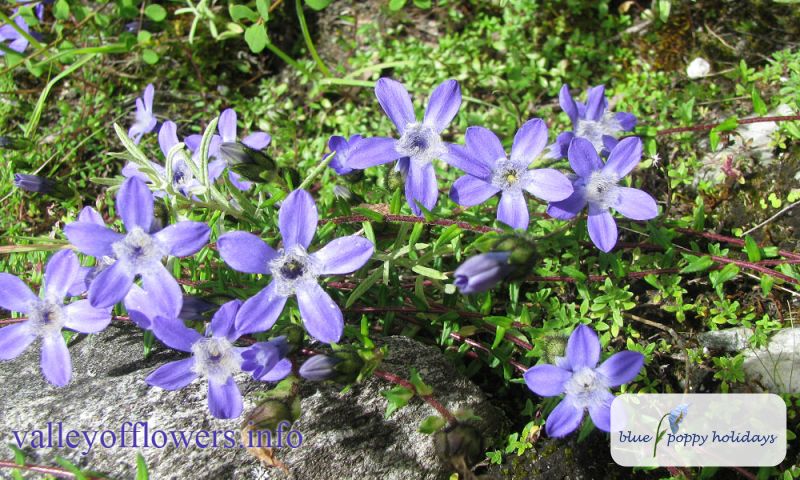
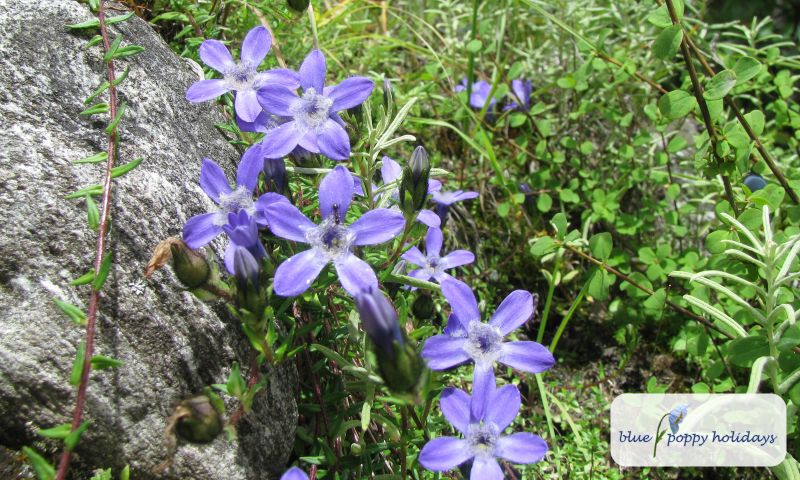
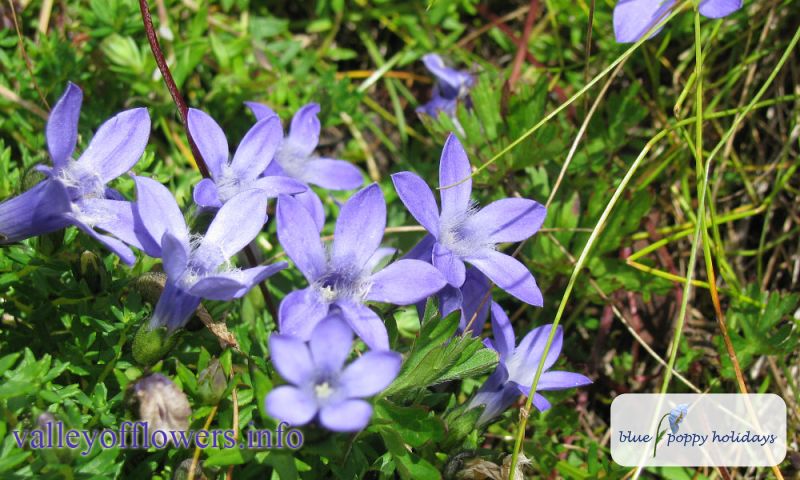
Cyanatus microphyllus, the name itself tells a lot of things about the flower, cyananthus = blue flower; microphyllus = small-leaved. It is a low growing perennial plant grows up to 5-10 cm high. It has trailing woody and reddish stems with tiny bright green leaves. Leaves entire are dark green, narrow, elliptic-ovate and at base rounded. Flowers are solitary, blue-violet, funnel-shaped and with narrow-obovate pointed spreading petals and with tuft of white hairs within the flower-tube.
Where to find it
- In the middle of the valley
What the name means
Cyananthus: Greek kyanos (dark blue) + anthos (flower); microphyllus means "small-leaved".
Don't confuse it with
Cyananthus lobatus (sno 39) is larger and mat-forming; C. microphyllus is even smaller-leaved.
Questions travellers asked us
Real questions from readers of this page over the years, answered by Devkant Sangwan. Each one shows its date. Roads, rules and arrangements may have changed since, so please ask us about your own dates.
-
Piet V. ·
Cyanatus = Cyananthus
and for some species the species name has a capital, which is never the case, as only the genus name is capitalized.
But otherwise a very nice collection of pictures and descriptions. Hope you are still expanding it, as there are more species of interest.
best regards
PietDevkant Sangwan ·
Thanks! Yes we are still expanding it. Please visit Valley of Flowers Tour Packages for more information.
More photos
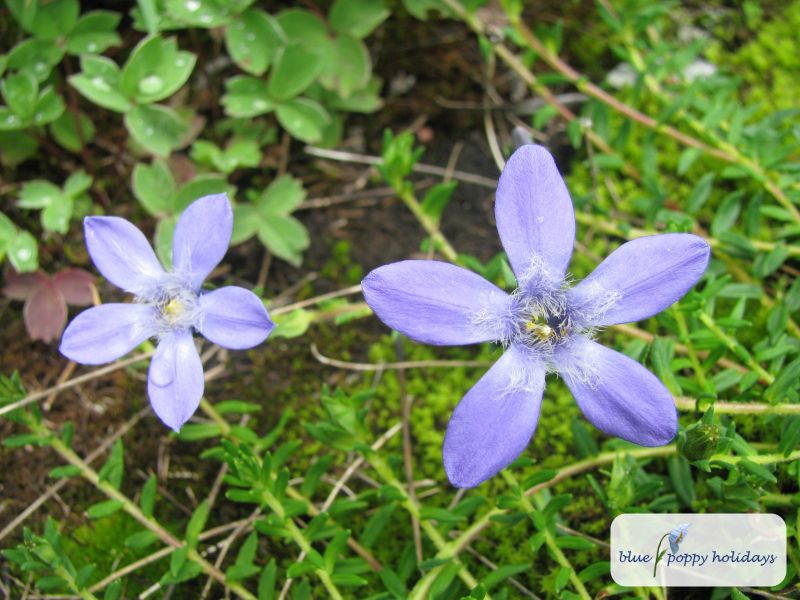
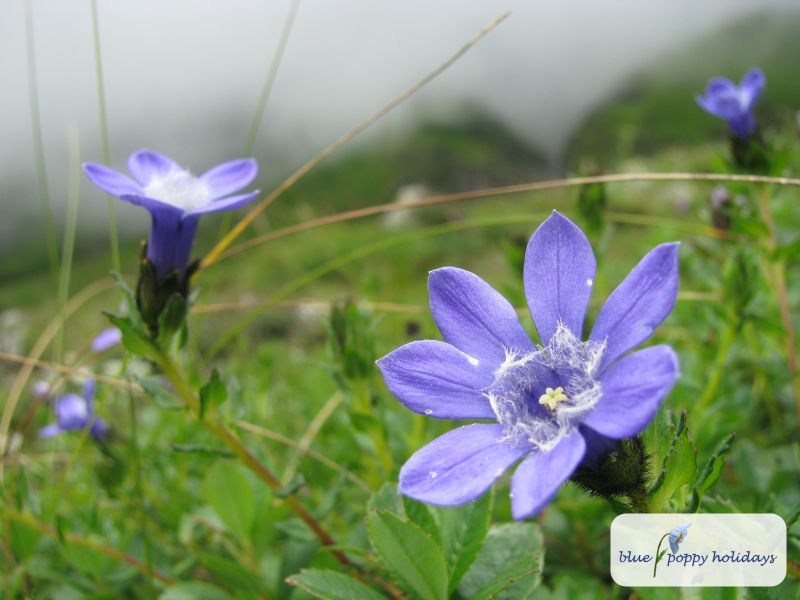
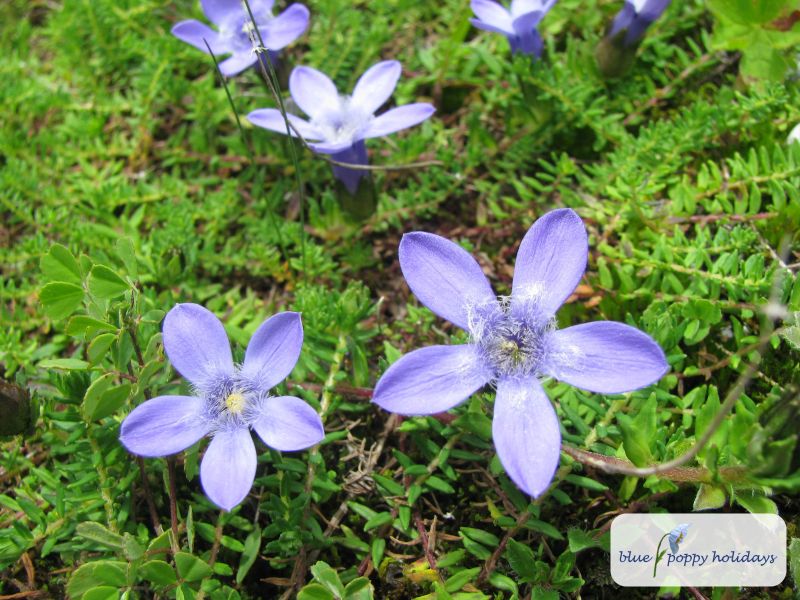
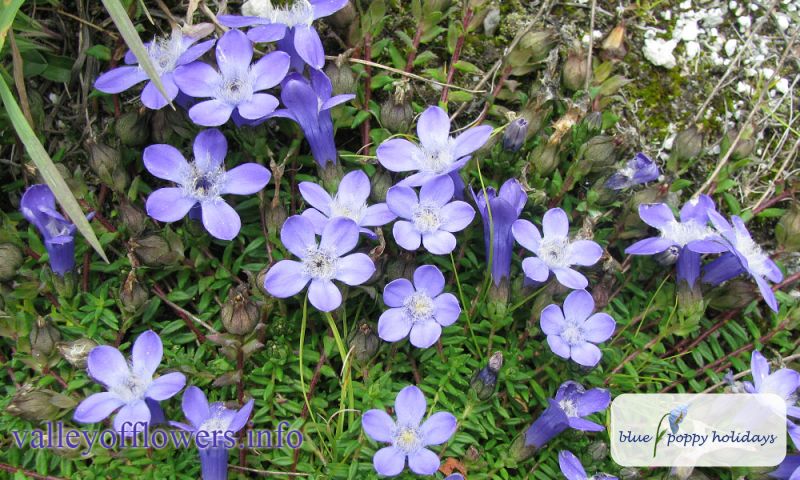
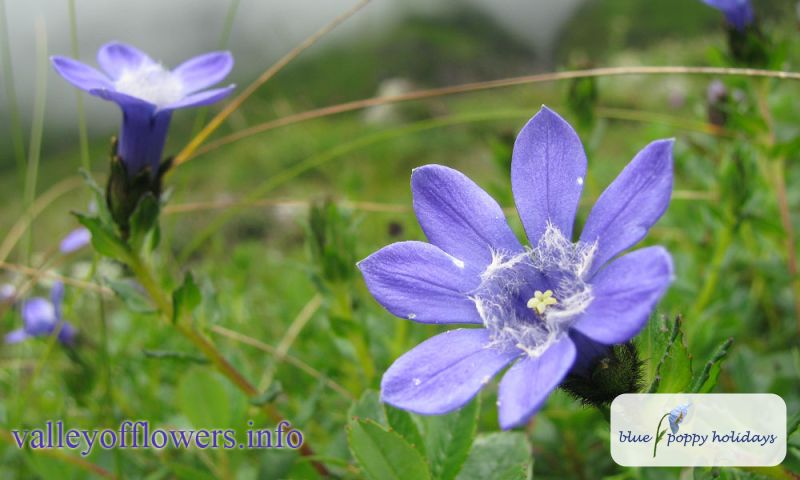
A macro view reveals the delicate textures of Cyananthus Lobatus, with hairs on its petals catching morning light. These adaptations help… 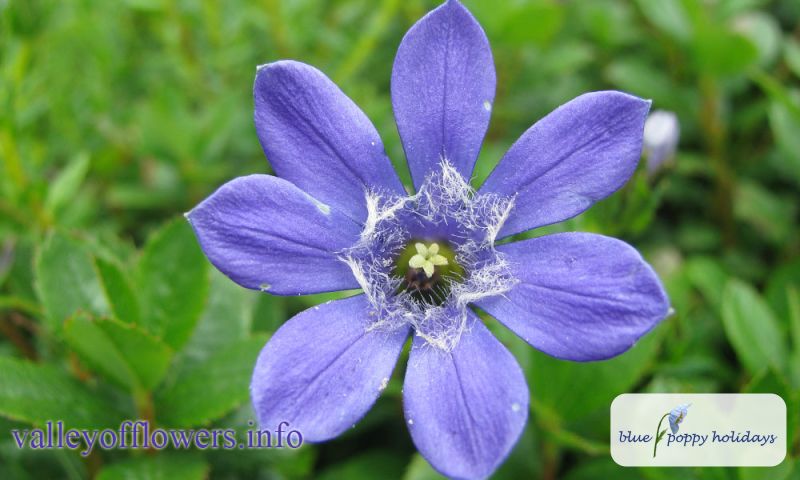
Blooming quietly near a rocky edge, this Cyananthus Lobatus displays curled, bluish-purple petals. The flower’s resilient nature allows it…