Wildflower of the valley
Evergreen Laburnum, Nepal Laburnum
Piptanthus nepalensis
- Family
- Fabaceae (Pea family)
- Local name
- Suga Phool, सुगा फूल · Sikasike, सिकसिके
- Type
- Evergreen shrub
- Height
- 3–4 m
- Altitude
- 2100–3600 m
- Flower colour
- Bright yellow
- Flowering
- March to May
About Evergreen Laburnum, Nepal Laburnum
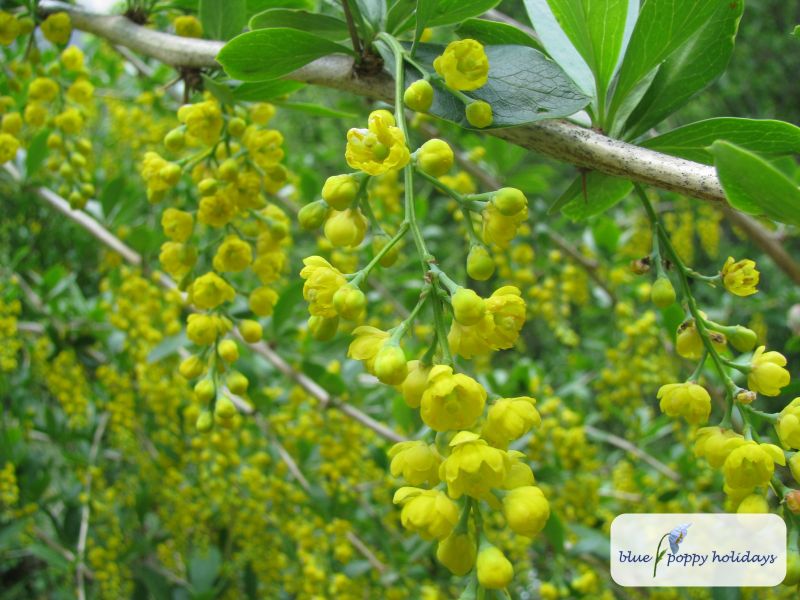
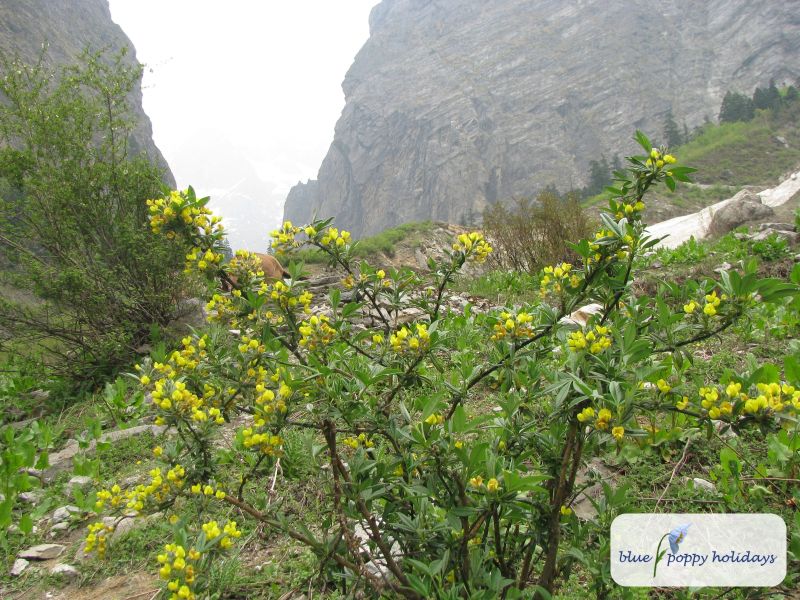
Piptanthus nepalensis is a handsome evergreen shrub of 3–4 metres, unmistakeable in flower for its laburnum-like sprays of large bright yellow blooms held at the tips of the branches. It has dark green, glossy bark and trifoliate leaves — three narrow, pointed leaflets to each petiole, each leaflet 3–10 cm long, dark shining green on the upper surface and covered in a grey felt of hairs beneath, which gradually wears away as the leaf matures.
The flowers, 2.5–3 cm across, are borne in short, densely hairy racemes at the branch ends. Each is a classic pea-flower — the standard petal round and reflexed on a long claw, the wing petals held to either side, and the two lower petals fused into a keel that encloses the reproductive parts. The bell-shaped sepal cup is grey-hairy, with five large but unequal, blunt-tipped sepals; the bracts beneath each flower are elliptic and densely woolly.
It flowers early in the mountain year — from March through May — often before the summer flush of Himalayan alpines, giving the lower forest slopes a burst of bright yellow while snow still lingers on the higher meadows. Its range runs from Himachal Pradesh east through Nepal, Bhutan and the mountains of south-western China.
Older manuals may catalogue this plant under one of its several synonyms — Baptisia nepalensis, Piptanthus bicolor, or Thermopsis laburnifolia — but modern taxonomy has settled the name on P. nepalensis.
Habitat
Forests and shrubberies of the western and central Himalaya.
Uses & folklore
Like several other Fabaceae in this collection, Piptanthus nepalensis carries toxic alkaloids — chiefly cytisine — in its seeds and young shoots, and livestock instinctively leave it alone. Traditional Himalayan use has been chiefly ornamental and, historically, as a hardy shrub for planting along field boundaries.
What the name means
Piptanthus comes from two Greek roots — pipto ("to fall") and anthos ("flower") — after the flower parts that fall away neatly once pollinated, a feature that helped early botanists tell it apart from the closely-related genera. The species name nepalensis simply records the country of its type collection: Nepal.
Don't confuse it with
Compare with Thermopsis barbata (sno 59), another Himalayan yellow-flowered Fabaceae, which is a much smaller herbaceous plant with a bristly seed pod. Other pea-family members here — Oxytropis lapponica (sno 142) and Vigna vexillata (sno 79) — differ in habit and are herbaceous rather than shrubby. True Laburnum (genus Laburnum) is a deciduous tree, not evergreen, and does not occur wild in the Himalaya.
More photos
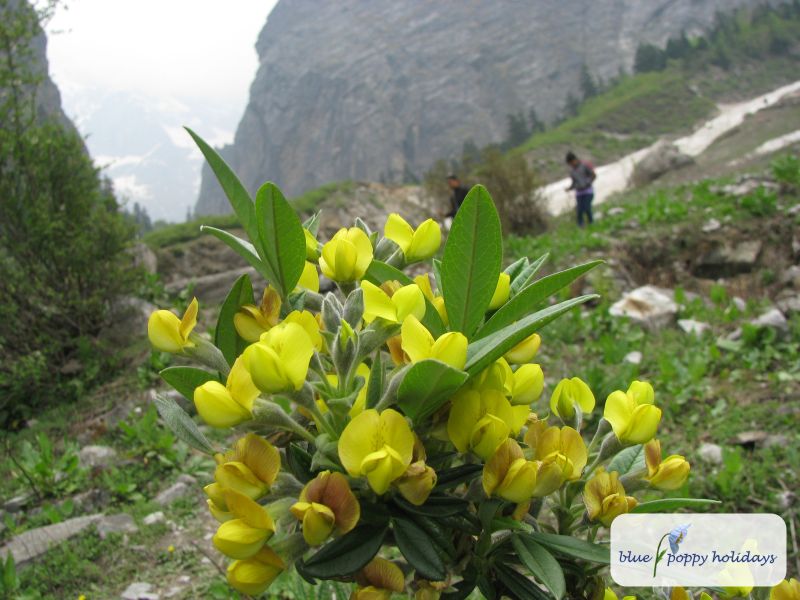
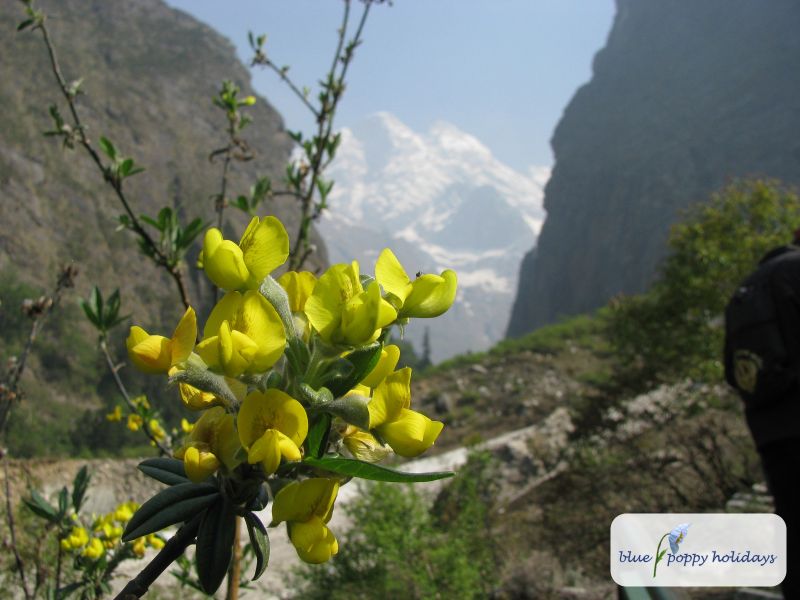
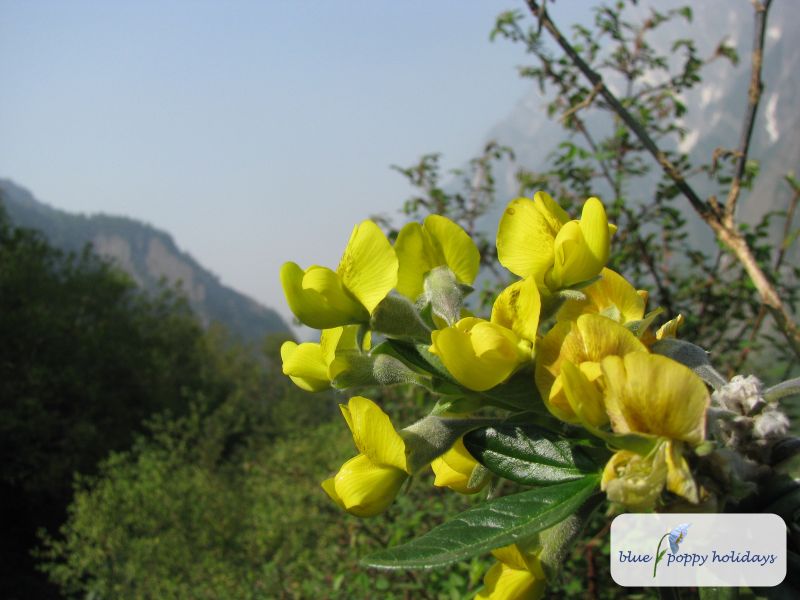
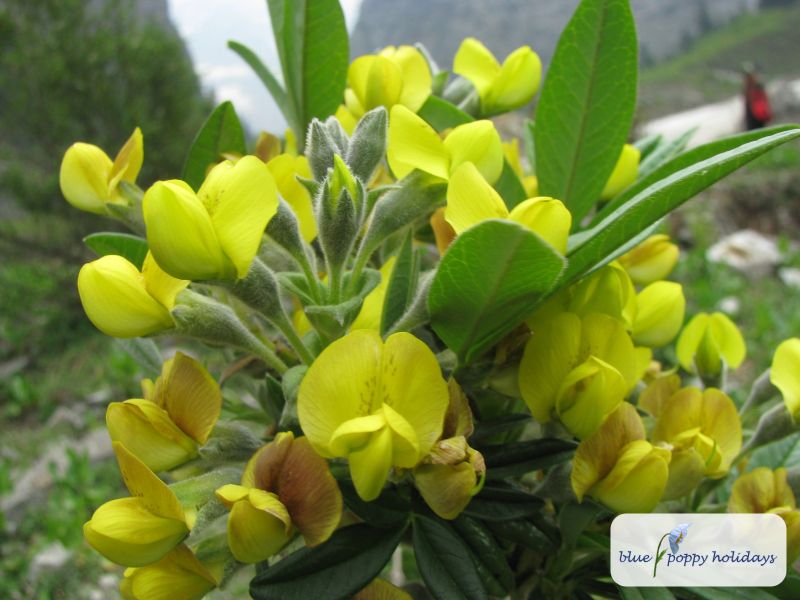
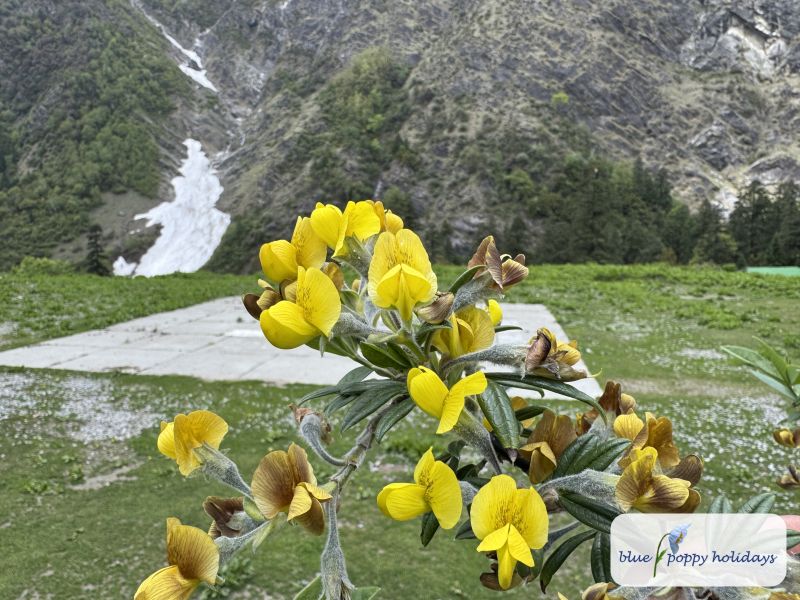
Photographed near Ghangaria in May 2025, before the valley opens on 1 June.