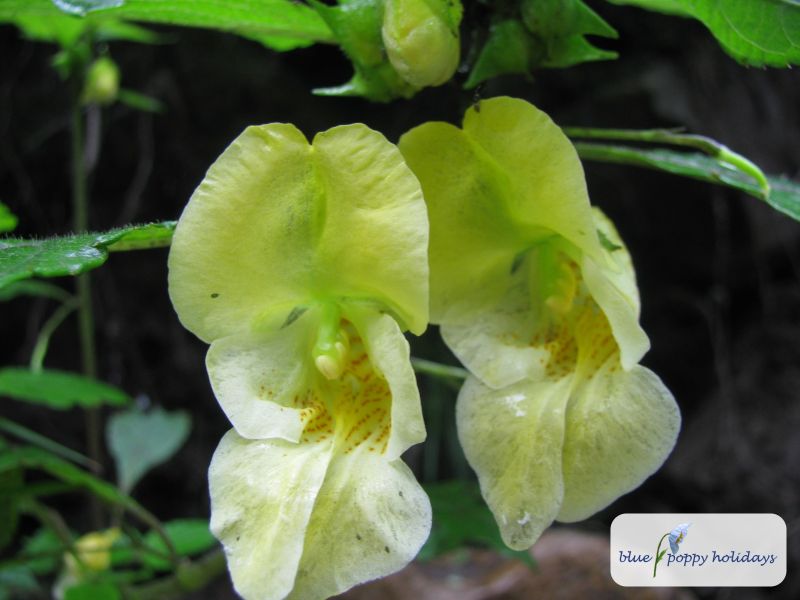
Wildflower of the valley
Yellow Jewelweed, Pale Touch-me-not
Impatiens pallida
- Family
- Balsaminaceae (Balsam family)
- Local name
- NOT AVAILABLE
- Type
- Annual herb
- Height
- 1–2 m
- Altitude
- 2400–3200 m
- Flower colour
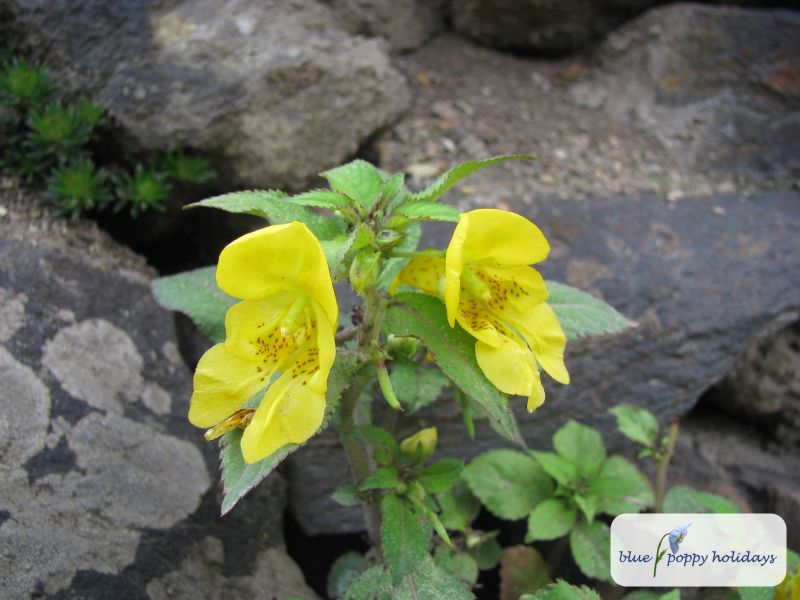
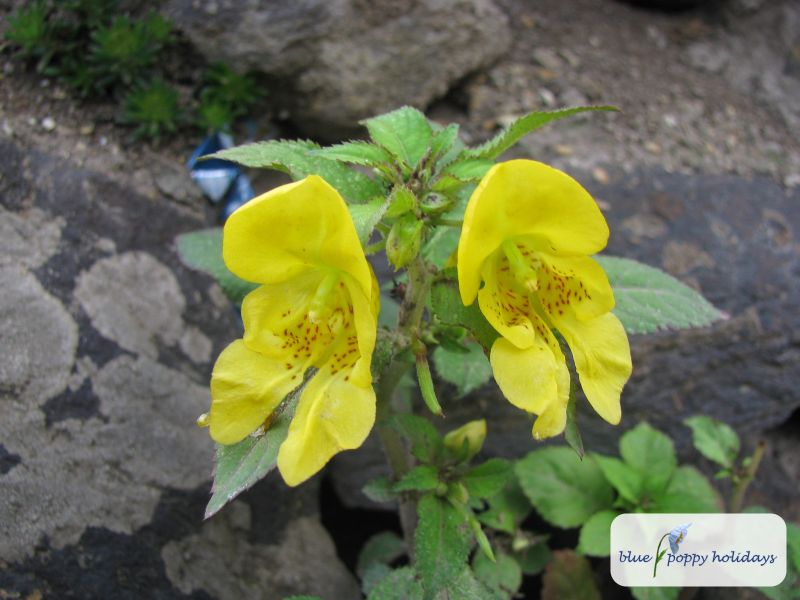
- Pale lemon-yellow, red-brown flecks inside
- Flowering
- July to September
About Yellow Jewelweed, Pale Touch-me-not
Impatiens pallida is a robust annual herb of one to two metres, with thick, translucent, light-green stems that are completely smooth and unusually succulent — the kind of stem that will snap wetly at a light bend. It branches freely, and the whole plant has a fresh, almost aquatic softness.
The leaves are ovate and thin, up to about ten centimetres long, with coarsely toothed margins. They have a curious surface chemistry: when submerged in water, or when wet with morning dew, the leaves trap a microscopic layer of air against their underside and appear brilliantly silvery — as if plated with mercury. This is the origin of the common name Jewelweed.
The flowers hang gracefully from slender stalks below the leaf canopy — cornucopia-shaped, pale lemon-yellow, with a widened floral pouch and a short nectar spur bent sharply downward at the back. The inside of the throat is dotted with small reddish-brown flecks that guide long-tongued pollinators toward the nectar. Bumblebees and, in its home range, ruby-throated hummingbirds are the classic visitors; here in the Himalayan understorey the pollination work falls to local bumblebees.
Once pollinated, the flowers develop into elongated green seed capsules that ripen through late summer and autumn. Under their thin green skin the pod walls hold themselves in a state of increasing mechanical tension; the lightest touch — a raindrop, a passing shoe — triggers them to coil back on themselves with a sudden snap, flinging the seeds a metre or more. This explosive dispersal is why the plant carries the folk name Touch-me-not.
Where to find it
- Along the trail from Govindghat to Ghangaria
Habitat
Shady, damp mixed forest floor, streamside understorey and moist woodland margins.
Uses & folklore
The watery sap of the crushed stems has been used for centuries as a topical remedy for itching, insect bites, skin rashes and — most famously — the burning sting of poison ivy exposure. The mucilaginous juice is rubbed directly onto the affected skin. Native American communities from eastern North America first recorded this use; early European settlers adopted it, and it remains a folk remedy in rural areas today. A minor botanical irony: the jewelweed thrives in the exact damp shady woodlands that also favour poison ivy, so the antidote often grows within arm's reach of the ailment.
What the name means
Impatiens is a Latin word meaning "impatient" — a reference to the seed capsules that explode violently at the lightest touch, unwilling to wait to be pollinated or picked. The species name pallida is Latin for "pale", after the delicate lemon colour of the flowers, which sets this species apart from its more strongly-coloured relatives.
Don't confuse it with
The native Himalayan Impatiens sulcata (sno 64) is a much taller plant — often over two metres — with strongly pink-purple flowers and a deeply grooved stem. Impatiens pallida is set apart by its pale lemon flowers, the short down-bent nectar spur and its clearly forest-understorey habit. In its native North America, its close cousin Impatiens capensis (Orange Jewelweed) shares the same habitat but has bright orange, heavily speckled flowers with a long, deeply-curved tail-like spur.