Wildflower of the valley
Marsh Woundwort, Marsh Hedge-nettle
Stachys palustris
- Family
- Lamiaceae (Mint family)
- Local name
- NOT AVAILABLE
- Type
- Perennial herb
- Height
- 40–150 cm
- Altitude
- 2000–3500 m
- Flower colour
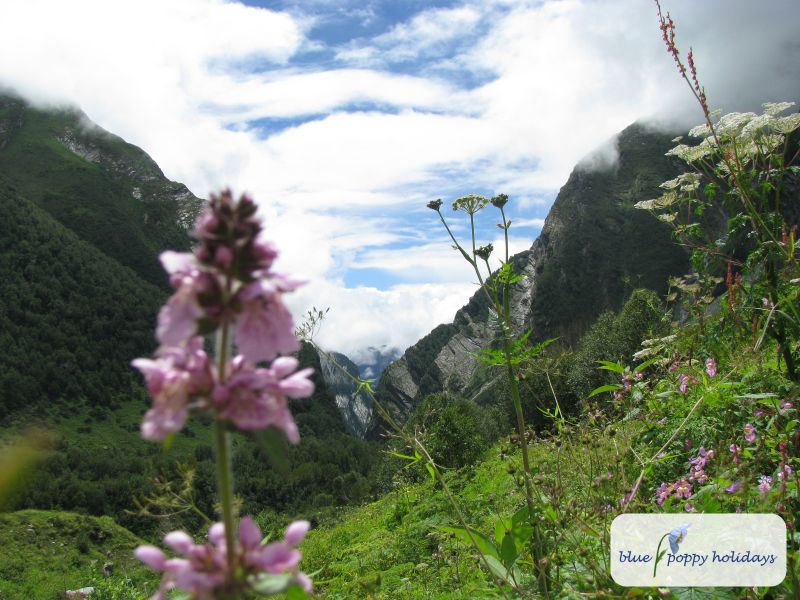
- Purple to red-purple
- Flowering
- July to September
About Marsh Woundwort, Marsh Hedge-nettle
Marsh Woundwort is an upright, softly hairy perennial of 40 cm to 150 cm in height, unmistakable for the square stems that mark it as a member of the mint family. The leaves are lance-shaped, opposite in pairs along the stem, roughly 5–12 cm long, with finely toothed margins and a soft, dull-green surface.
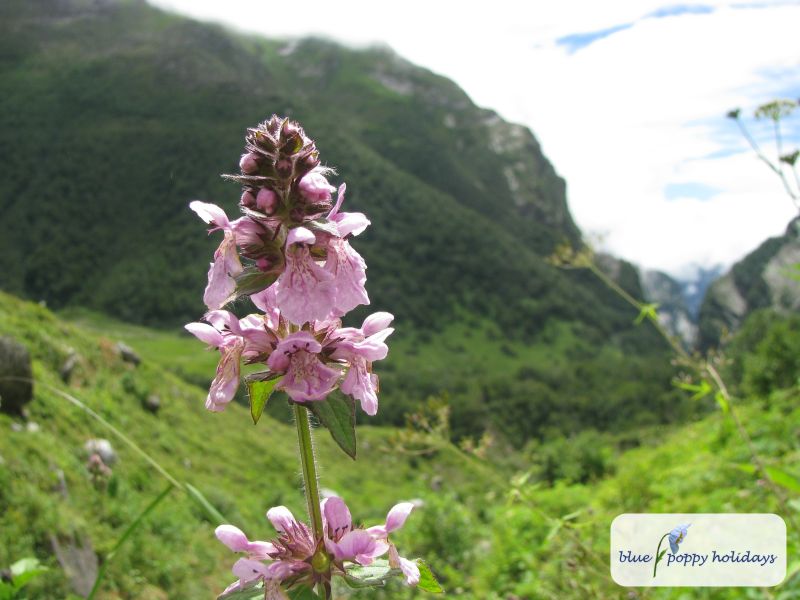
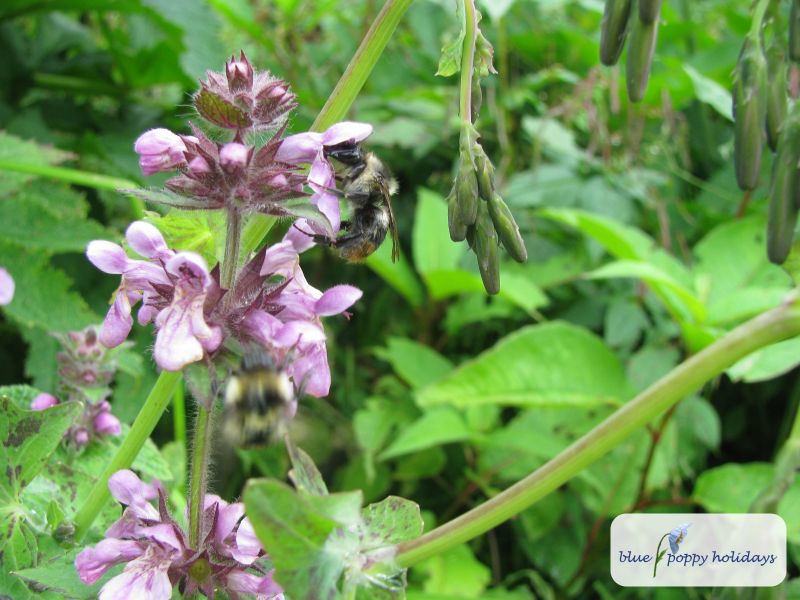
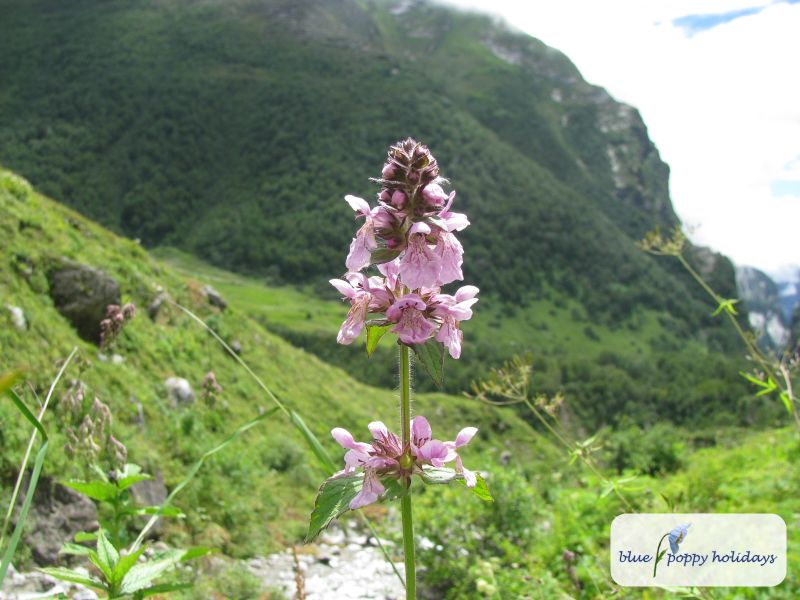
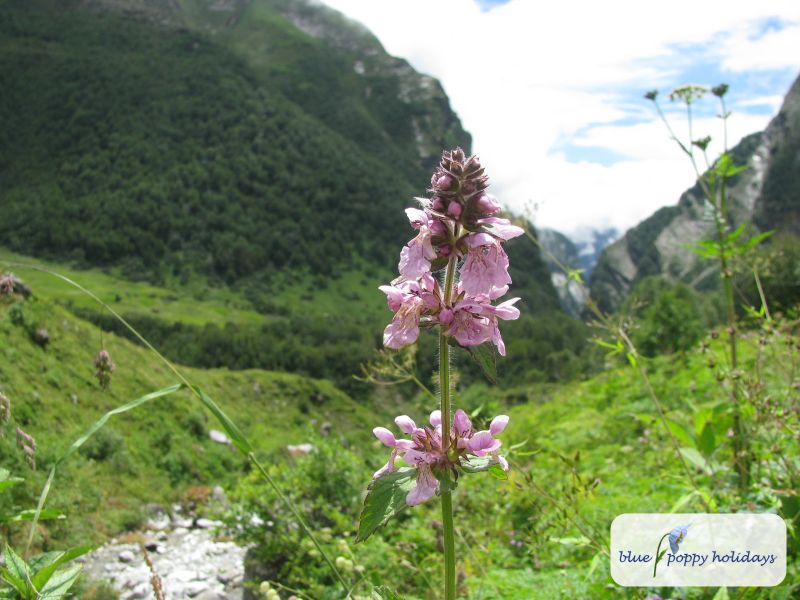
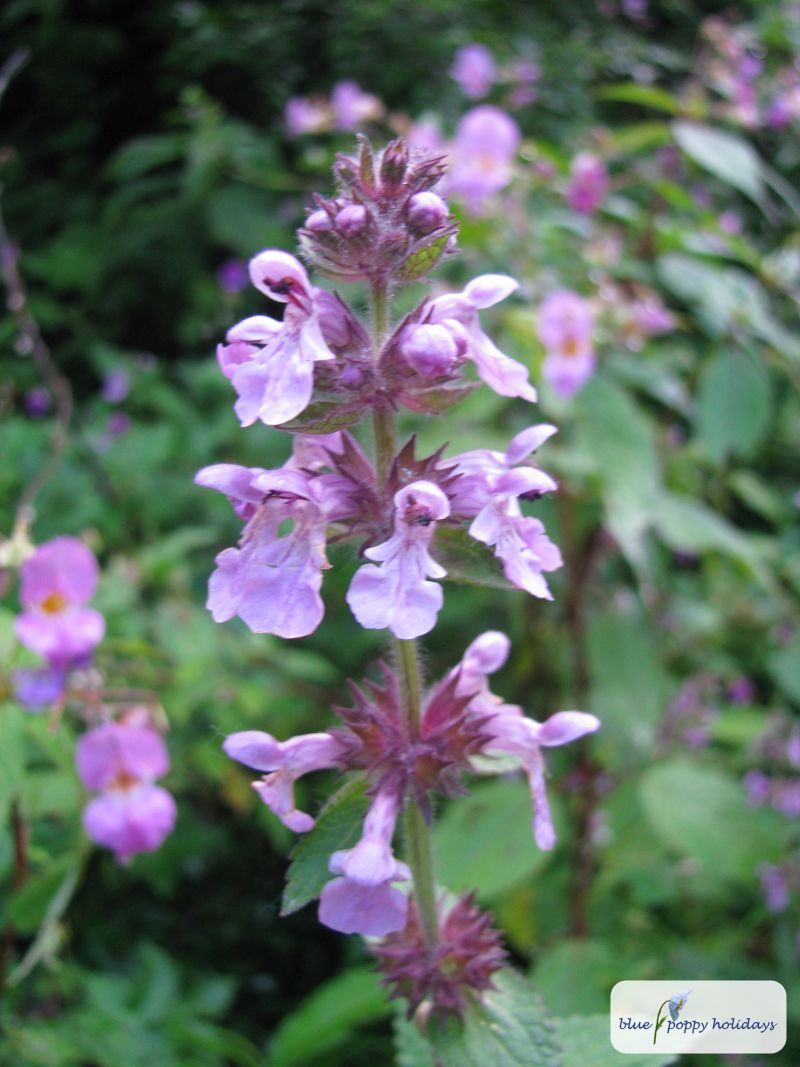
The flowers are arranged in a distinctive interrupted spike at the top of the stem — dense whorls of six to ten blooms are separated by short bare intervals, giving the inflorescence a stepped or beaded appearance. Each individual flower is tubular, two-lipped, and purple to red-purple, marked with paler blotches on the lower lip that guide pollinating bees to the nectar; the upper lip forms a small hood.
True to its name, it favours damp ground — marshy edges, riverbanks, wet meadows and the boggy fringes of alpine springs — and often stands taller than its neighbours in these habitats.
Habitat
Damp edges, wet meadows, streamsides and boggy alpine turf.
Uses & folklore
An old British herbalist's standby: John Gerard, writing in 1597, insisted the crushed leaves applied to a wound would stop bleeding "with such incredible speed" that soldiers on campaign carried it in their satchels. The name Woundwort preserves that reputation. The plant contains stachydrine and betonicine — mild anti-inflammatory alkaloids that lend some credence to the folk use.
The tubers of Marsh Woundwort are quietly edible, and in earlier centuries were dug from ditches and boggy fields in Britain and northern Europe as a poor-crop starch. They are said to taste faintly of asparagus.
What the name means
Stachys is a classical Greek word meaning "ear of corn" or "spike", after the compact spike-like inflorescence that characterises the whole genus. The species name palustris is Latin for "of the marshes", from palus — a marsh or bog — describing the plant's preferred wet habitat.
Don't confuse it with
Several other mints share the Valley of Flowers habitat and the square stems characteristic of the family — Salvia nubicola (sno 91), Nepeta laevigata (sno 44), Nepeta erecta (sno 96), Phlomis bracteosa (sno 45), Colquhounia coccinea (sno 42), Origanum vulgare (sno 82) and Thymus linearis (sno 100) — but Stachys palustris is set apart by its tall stature, its wet-ground preference, and the distinctive interrupted spike of purple-red flowers.