Wildflower of the valley
Bristly Dubyaea
Dubyaea hispida
- Family
- Asteraceae (Sunflower family)
- Local name
- NOT AVAILABLE
- Type
- Perennial herb
- Height
- 15–75 cm
- Altitude
- 3000–4000 m
- Flower colour
- Yellow
- Flowering
- Late August to October
About Bristly Dubyaea
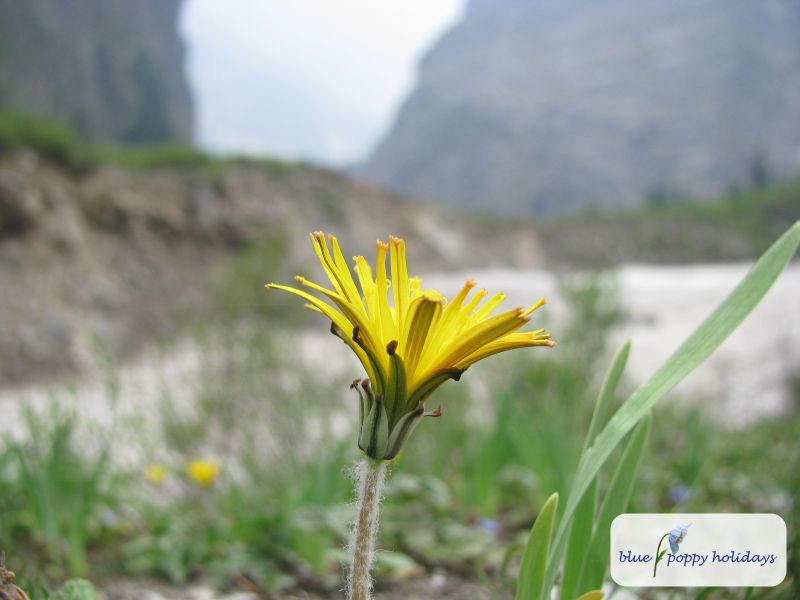
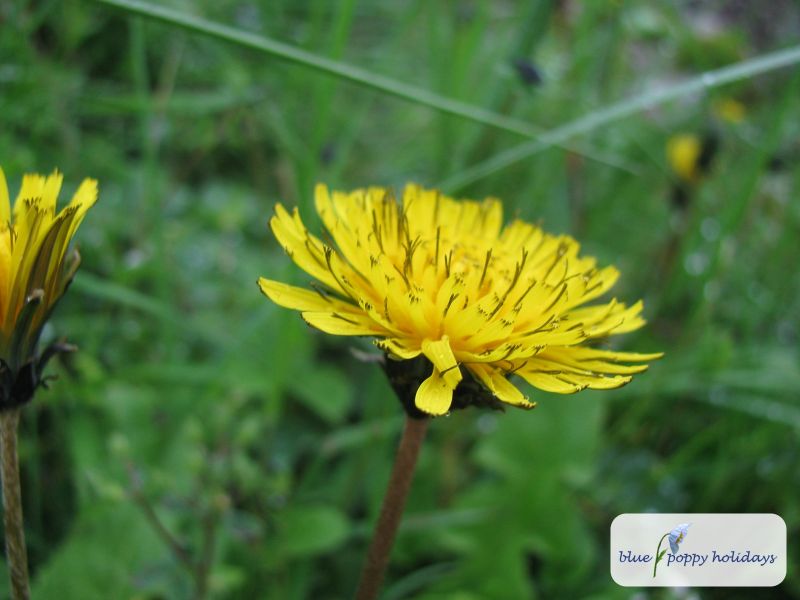
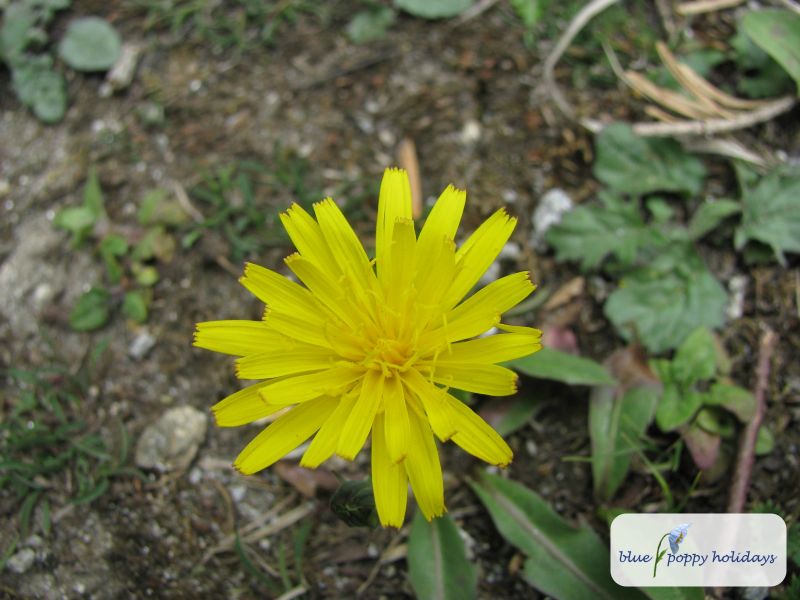
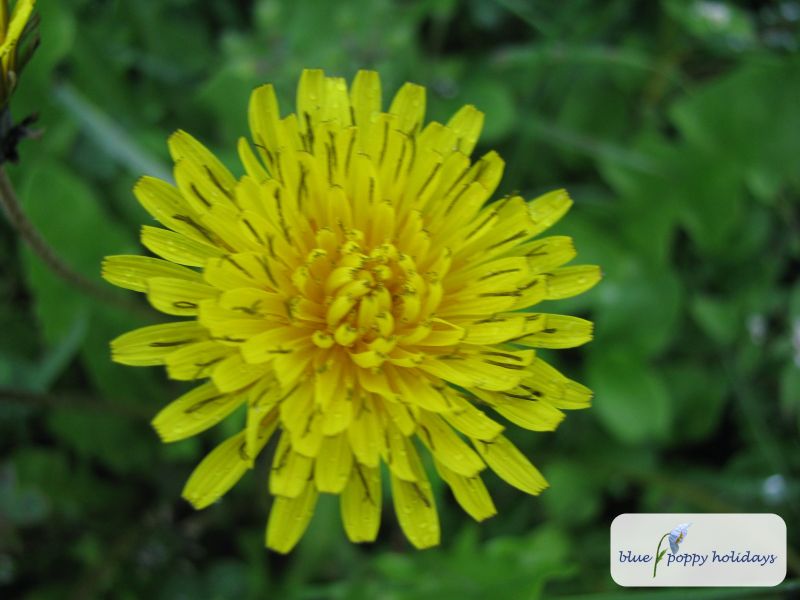
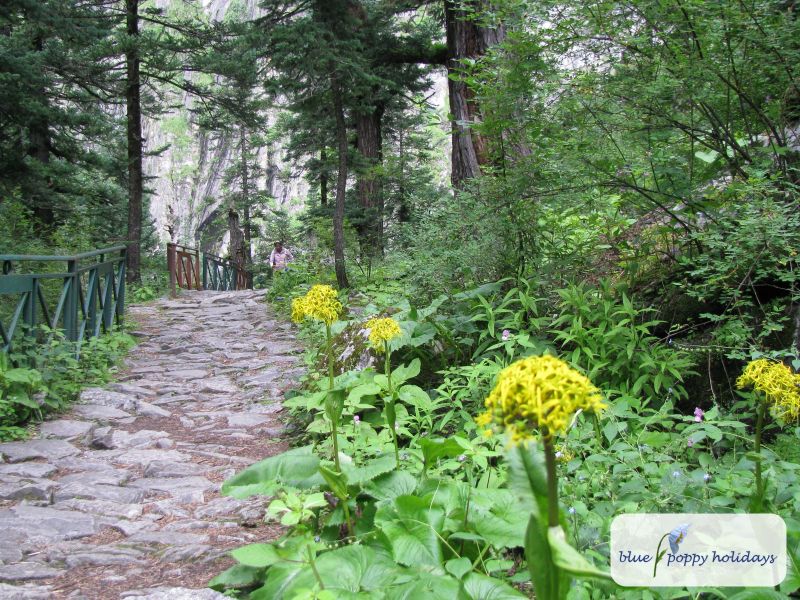
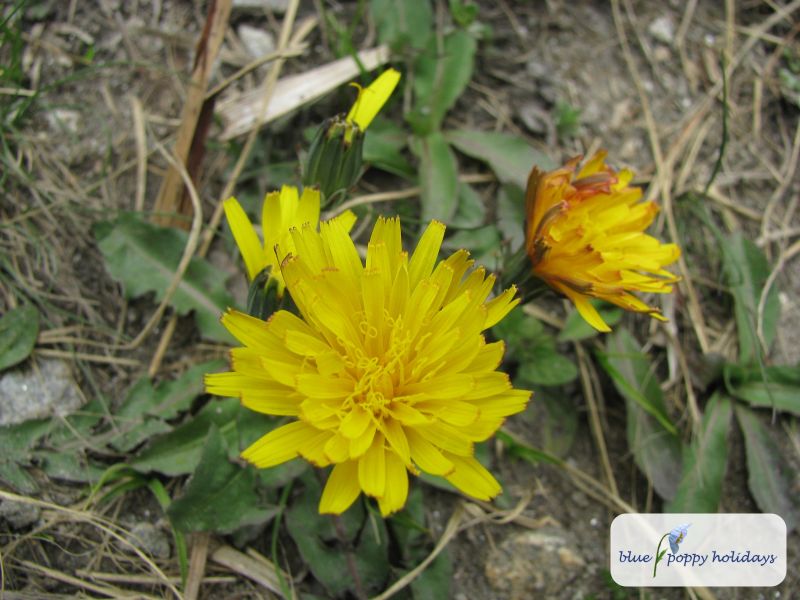
Dubyaea hispida is a densely hairy perennial herb, 15–75 cm tall, arising from a creeping rhizome and bleeding a milky-white latex when broken. The leaves are 5–15 cm long by 3–4 cm wide, gradually shrinking from base to stem-tip; they are ovate-oblong to lance-shaped, taper to a winged petiole at the base and to a sharp point at the tip.The flower-heads are a rich yellow, 2–3 cm across, and nod at the ends of their stalks in the way many Himalayan dandelion relatives do. The involucral bracts — the small leafy scales beneath each head — are up to 1 cm long, linear and unequal, and are strikingly clothed in short black bristly hairs, giving the head a dark-collared appearance. The strap-shaped ligulate florets are pure yellow; the anthers are yellow, and the black bifid stigma completes a handsome contrast of colour.This is a late-season plant, appearing when many others are past — it flowers from late August into October across grassy alpine slopes and moist rock crevices between 3000 and 4000 metres.
Habitat
Grassy open slopes and rock crevices.
What the name means
Dubyaea was named by A.P. de Candolle in honour of his friend J.E. Duby, who co-edited the Botanicon Gallicum with him. The species name hispida is Latin for "bristly" or "rough with stiff hairs", after the dark bristles that cover the plant.
Don't confuse it with
Superficially resembles some Himalayan hawkweeds and small dandelions but is set apart by the strikingly black bristly hairs on the involucral bracts and the nodding heads. Prenanthes brunoniana (sno 111) and Cicerbita macrorhiza (sno 94) belong to the same tribe of Asteraceae.