Wildflower of the valley
Hill Geranium
Geranium collinum
- Family
- Geraniaceae (Geranium family)
- Local name
- NOT AVAILABLE
- Type
- Rhizomatous perennial herb
- Height
- up to 60 cm
- Altitude
- 2800–4800 m
- Flower colour
- Lilac to rose (rarely white)
- Flowering
- July to August
About Hill Geranium
The Geraniaceae — the Geranium family — comprises seven genera and roughly 875 species worldwide; four genera and about 27 species of the genus Geranium itself are recorded in India. The name Geranium is drawn from the Greek geranos, "crane", after the long beak of the fruit that resembles a crane's bill.
Geranium collinum (Stephan ex Willdenow) — sometimes met with under the synonym G. aconitifolium Edgeworth & Hook.f., after its palm-shaped Aconitum-like leaves — is a rhizomatous perennial reaching about 60 cm in height. The leaves are 1.5–8 cm across, orbicular in outline and divided into five to seven principal lobes; each lobe is itself further cut into three or five blunt lobes so the whole leaf resembles a splayed palm. The lower petioles may reach 13 cm long; four stipules sit at each node.
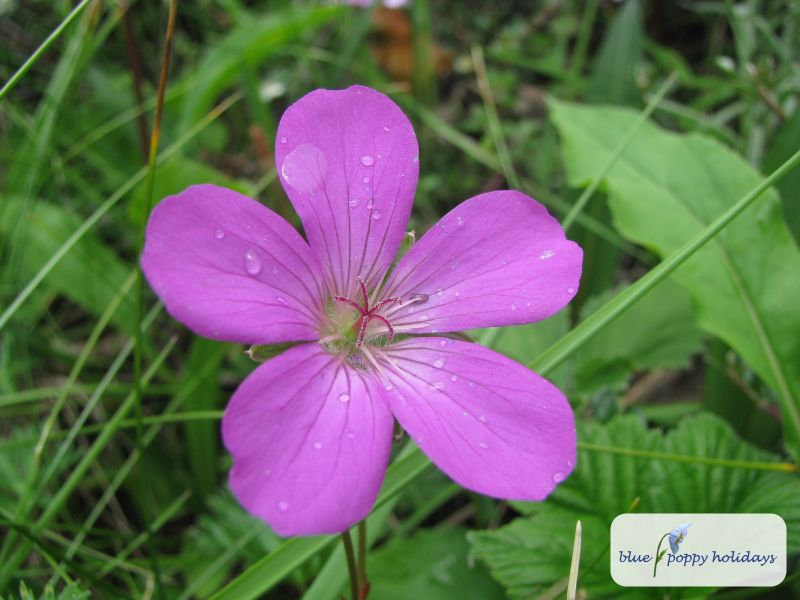
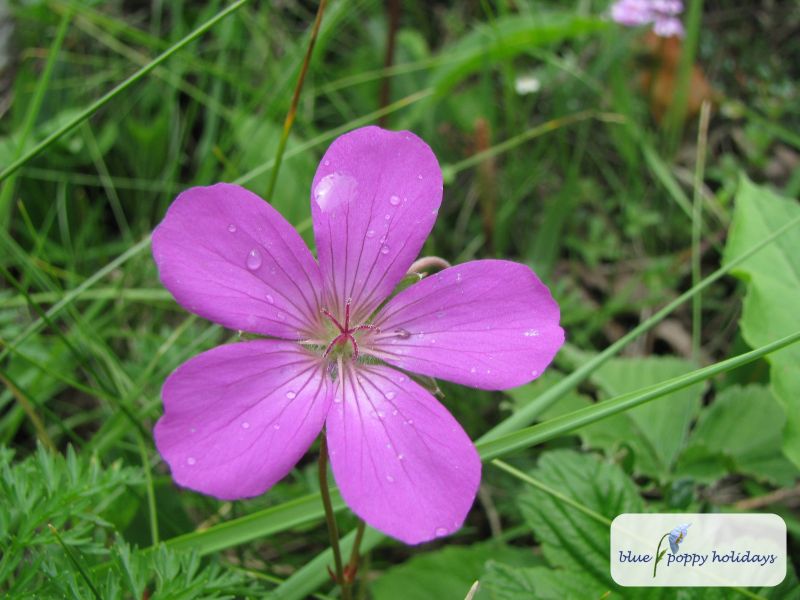
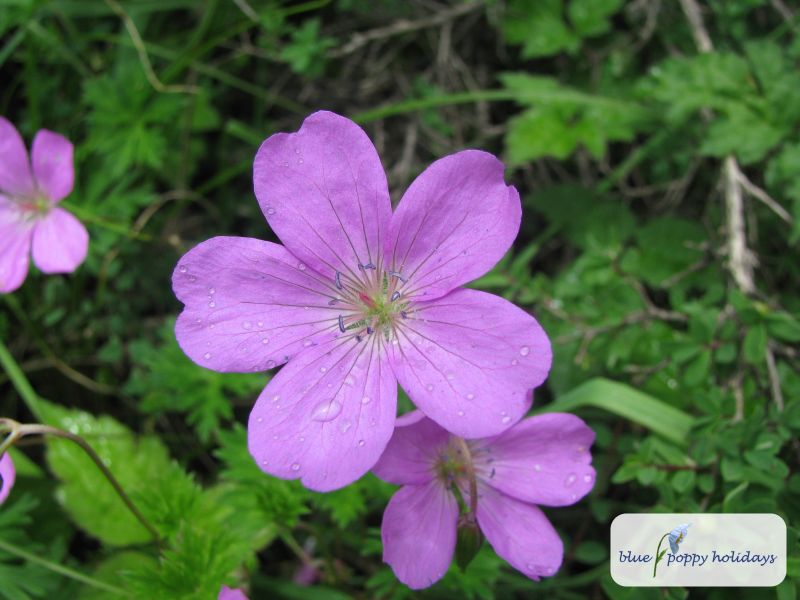
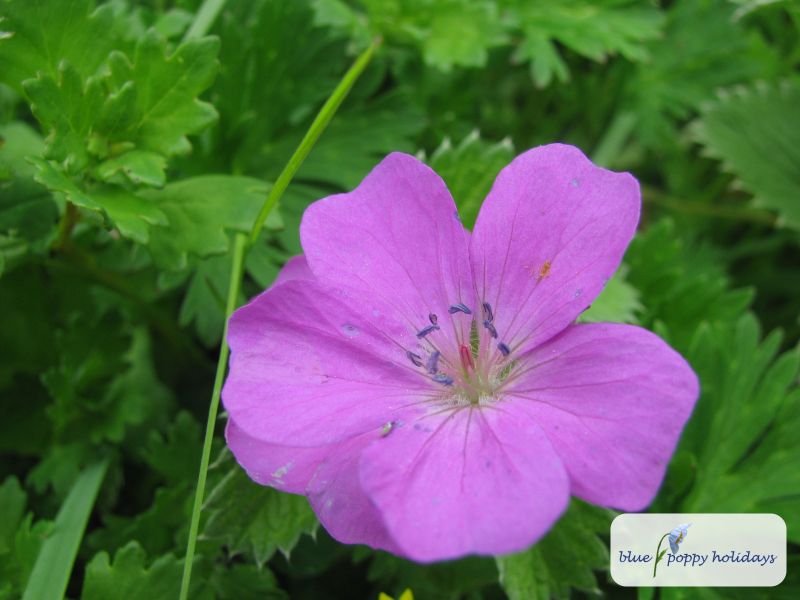
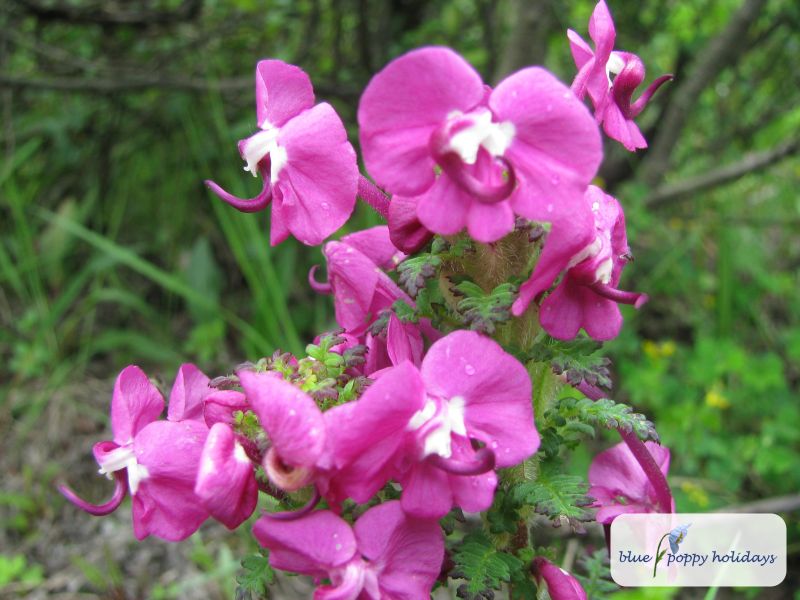
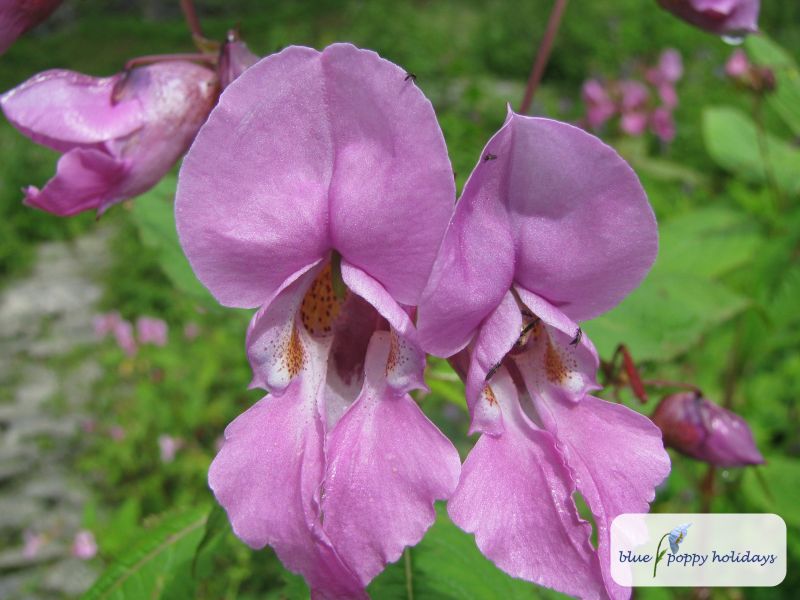
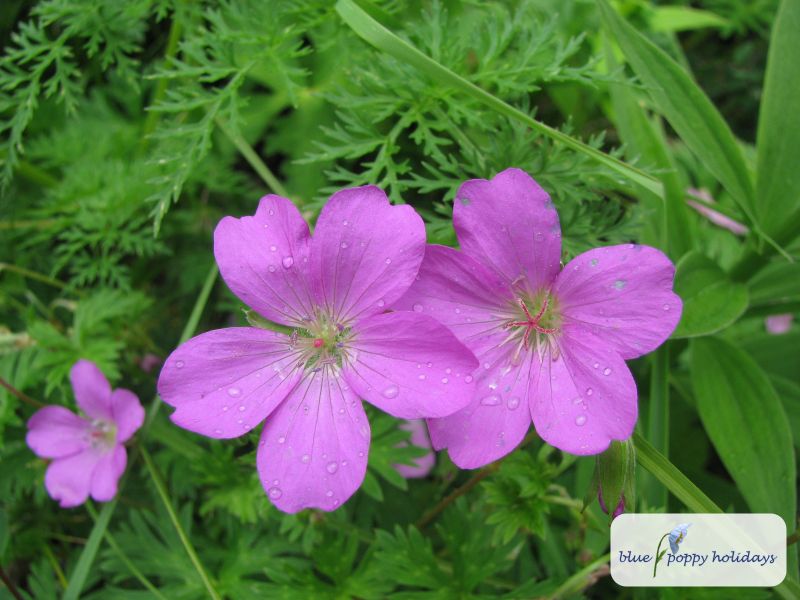
The flowers appear on stalks 5–15 cm long and are lilac to rose — occasionally pure white in the palest forms. Five free sepals, each 6–9 mm long, are glandular-hairy and end in a short awn; the five orbicular petals, 15–17 mm long, alternate with small nectar-bearing glands and are marked with dark, prominent rose-coloured veins. Ten stamens — five short and five long — surround five styles, forming the classic crane-beaked fruit that gives the genus its name.
It grows in genuinely damp places — springs, streambanks and boggy alpine turf — from the middle mountains up to nearly 5000 m.
Habitat
Moist places along streamsides and springy alpine turf.
Uses & folklore
Preventive folklore across the western Himalaya gives this Geranium an unusual reputation: an infusion of the leaves has long been rubbed into the scalp as a tonic said to slow the onset of grey hair, and the crushed leaves are held to the temples to ease headaches.
What the name means
Geranium comes from the Greek geranos (crane), for the long beak-shaped fruit that resembles a crane's bill. The species name collinum is Latin for "of the hills" — a reference to its preferred habitat on hill slopes and moist alpine banks.
Don't confuse it with
Geranium wallichianum (sno 12) has larger, showier flowers and a taller, more sprawling habit; Geranium robertianum (sno 106, "Herb Robert") is smaller with pink flowers and red-tinged stems. G. collinum is distinguished by its preference for genuinely wet ground and its five-styled, lilac-veined flowers.